In October 2025, We traveled to England for Ellen's craft retreat in Swindon, UK, but stayed for a while afterwards for sightseeing. This is the same retreat she attended in 2023.
(Click on each group of photos below for larger versions.)
We flew from Boston to London, arriving Wednesdsay morning before the retreat began. The first day (Thursday) included some classes weren't of interest for Ellen. We took advantage of proximity to Bath, and took the train to visit the Roman Baths.
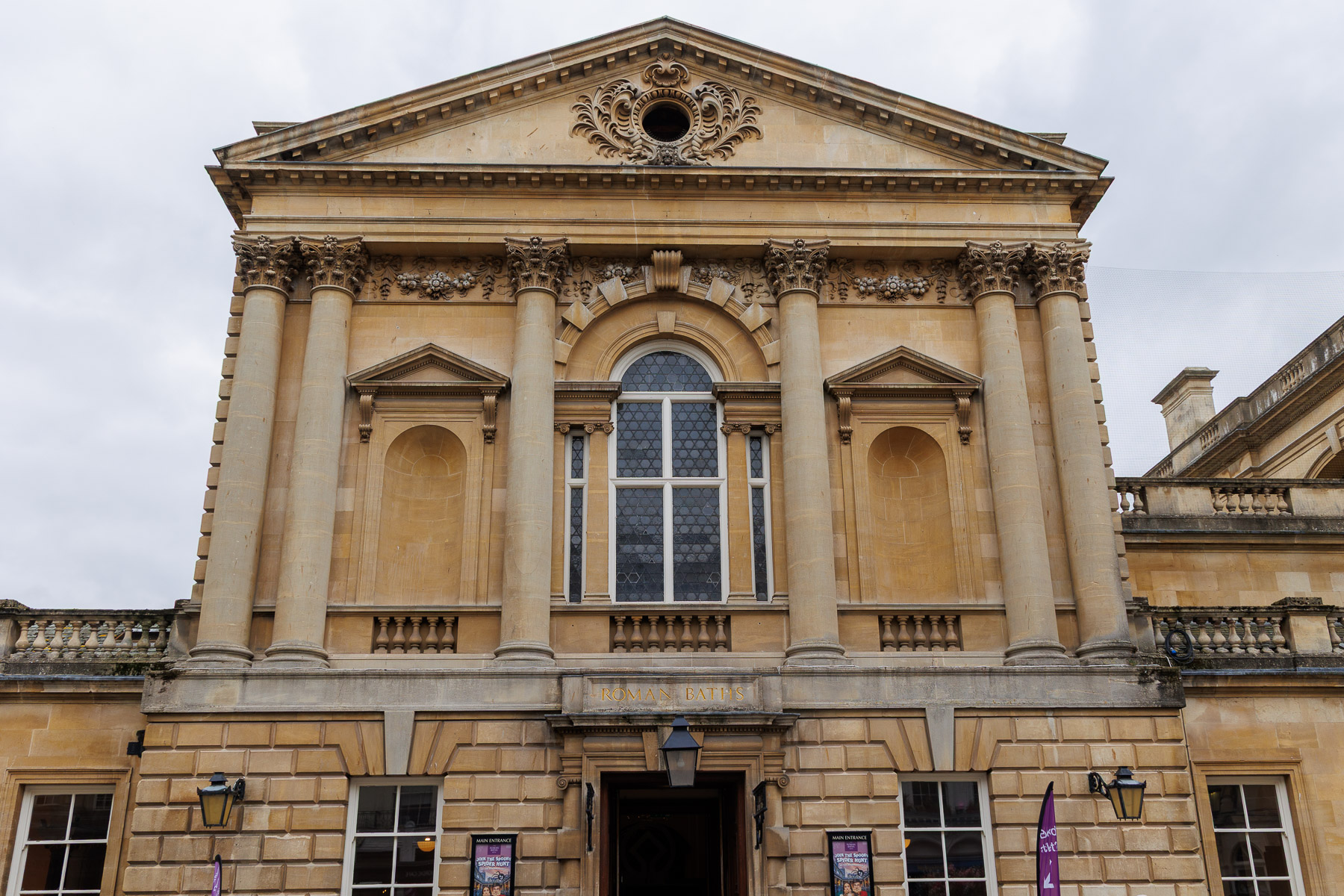
- The entrance to the 2000+ year old Roman Baths in Bath, UK.
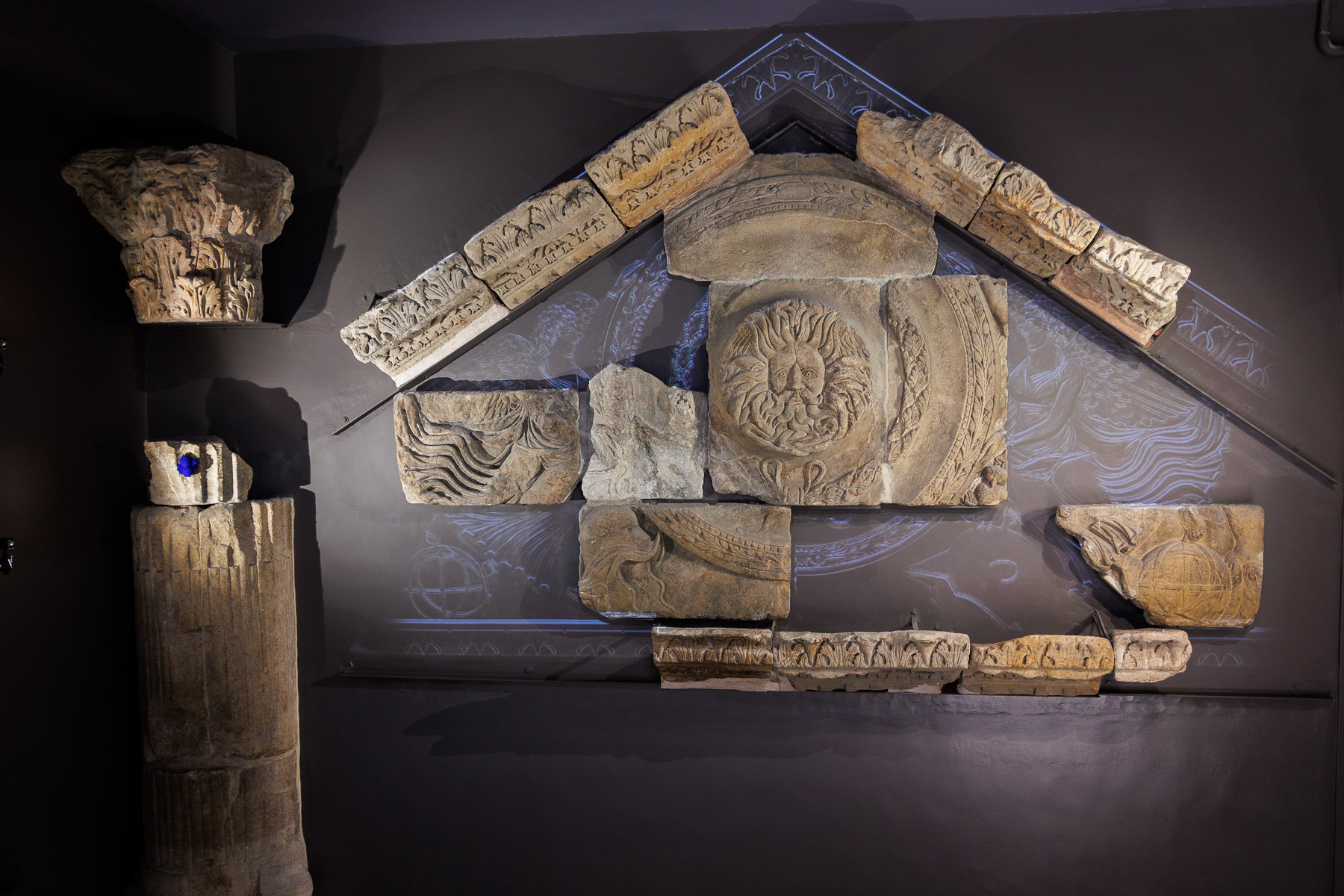
- Parts of the original opening of the Roman Baths., along with one of the pillars. The lighted outline illustrates what the full opening looked like.
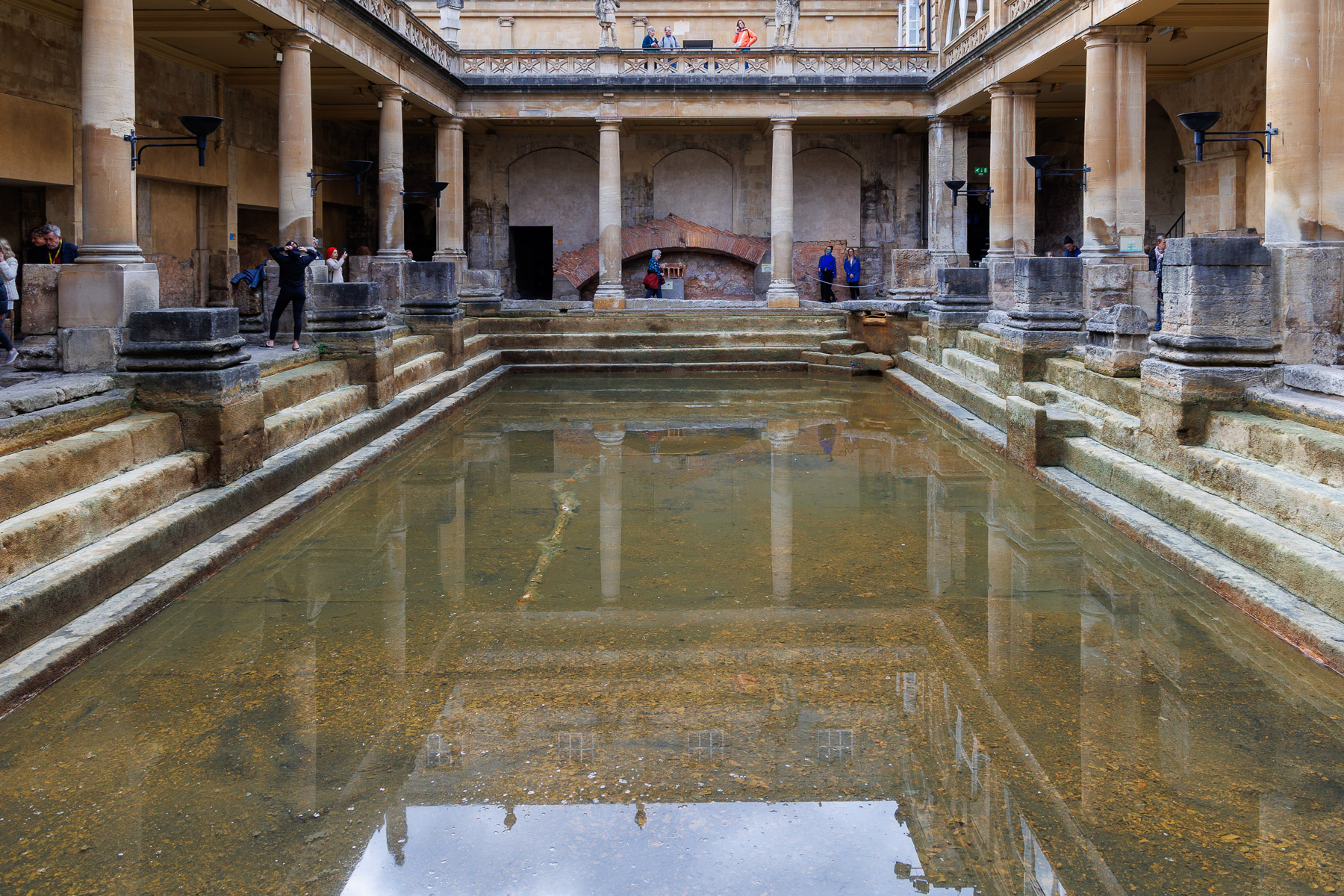
- The main bath at the Roman Baths. We visited on one of the times the baths are drained for cleaning, but we did get to see the steps leading to the baths. The steps are usually submerged.
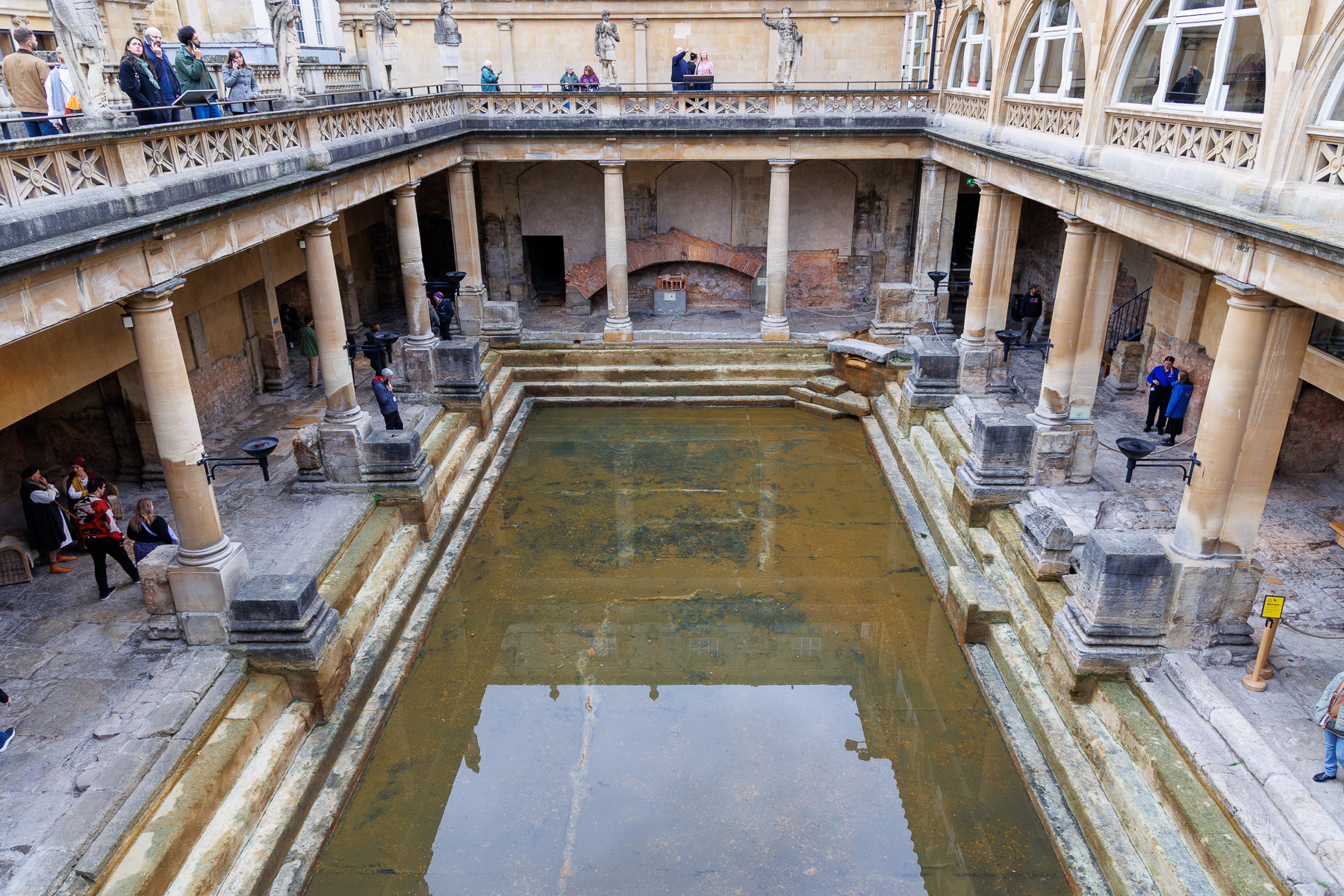
- A view of the baths from the upper level. This level was not part of the original structure built by the Romans. It was added in the 18th century.
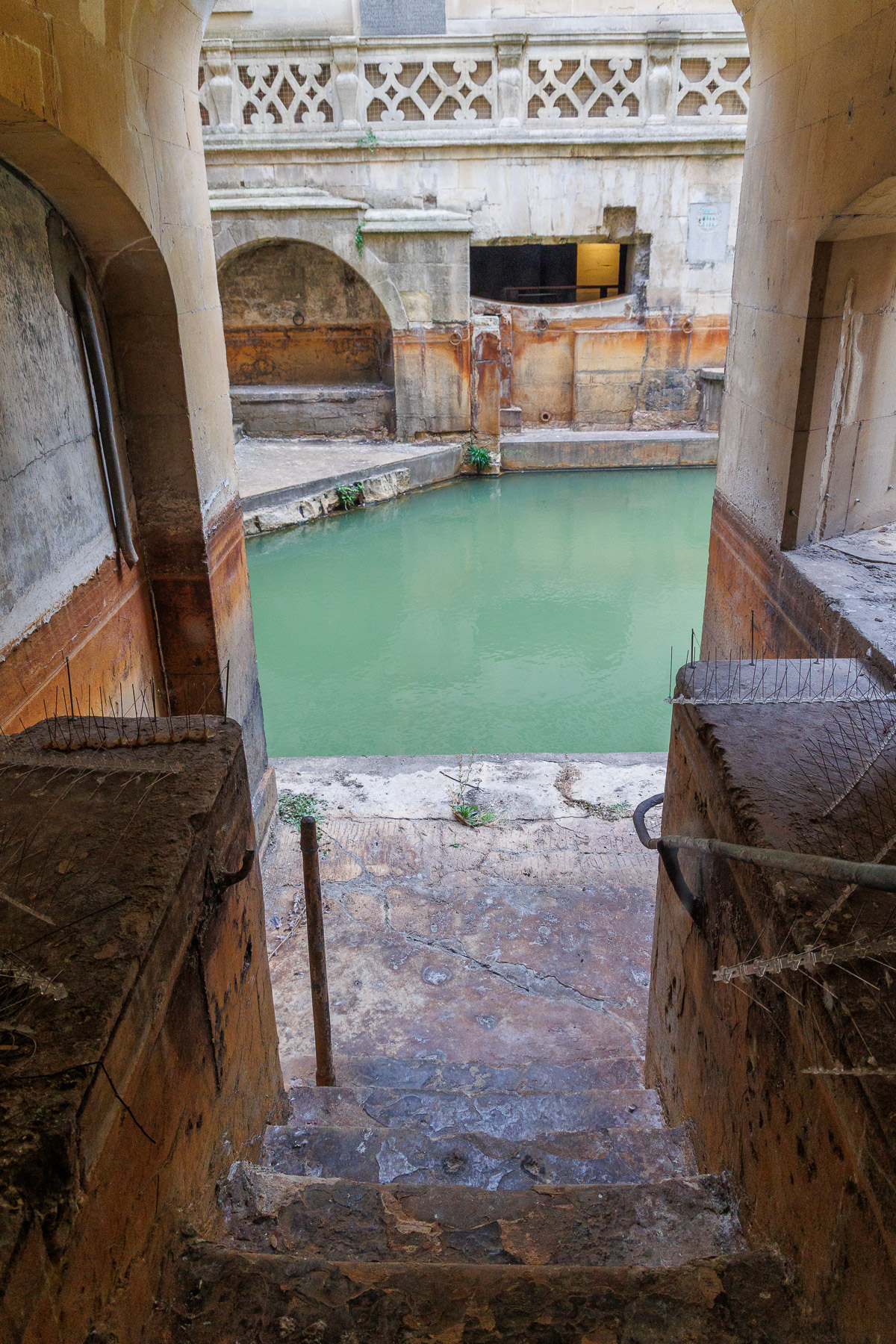
- The water for the baths comes from a hot springs next to the main bath. This photo shows the steps leading to the hot springs. The water is green due to the algae present in the warm water.
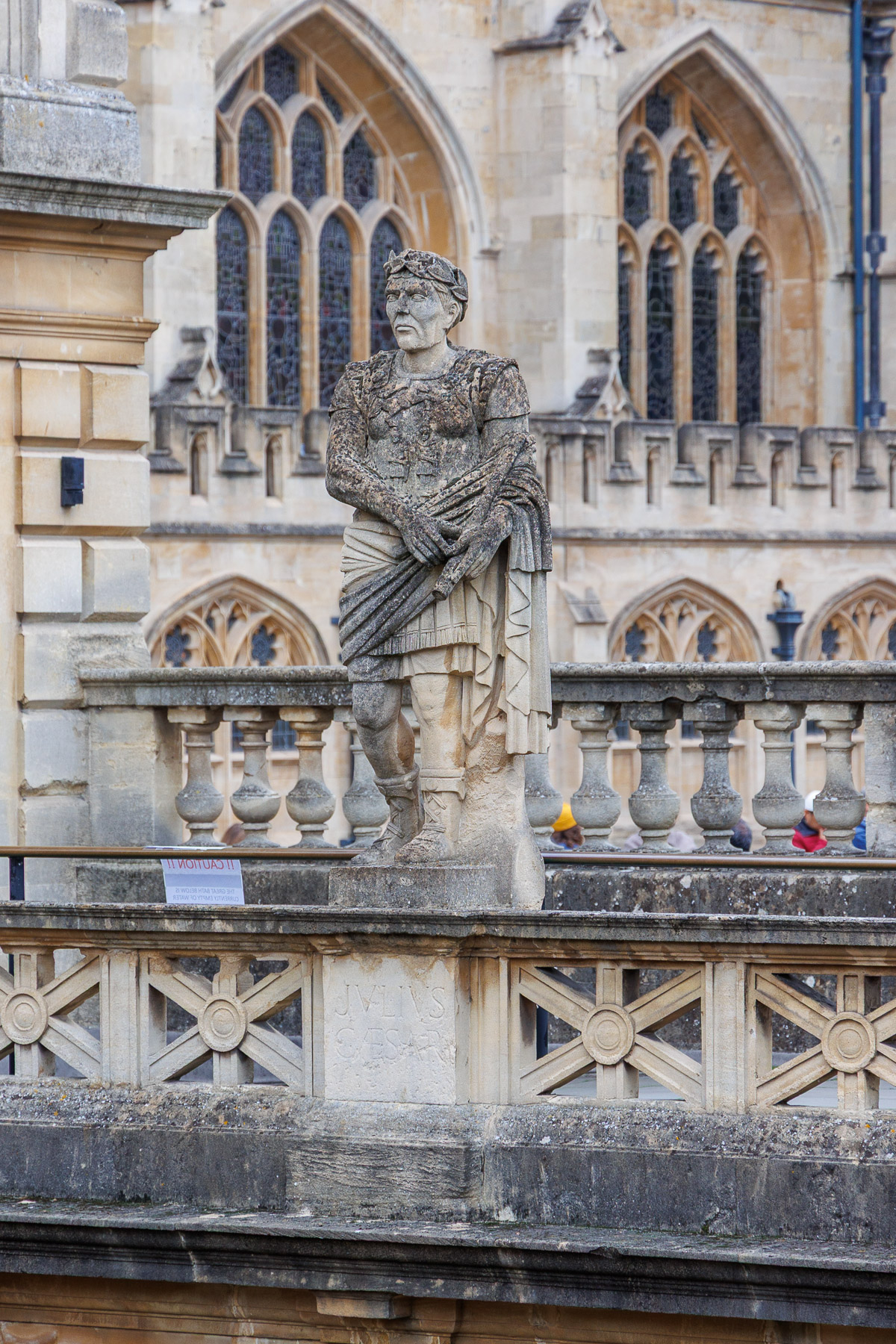
- On the upper level are statures of Roman emperors, including Julius Caesar.
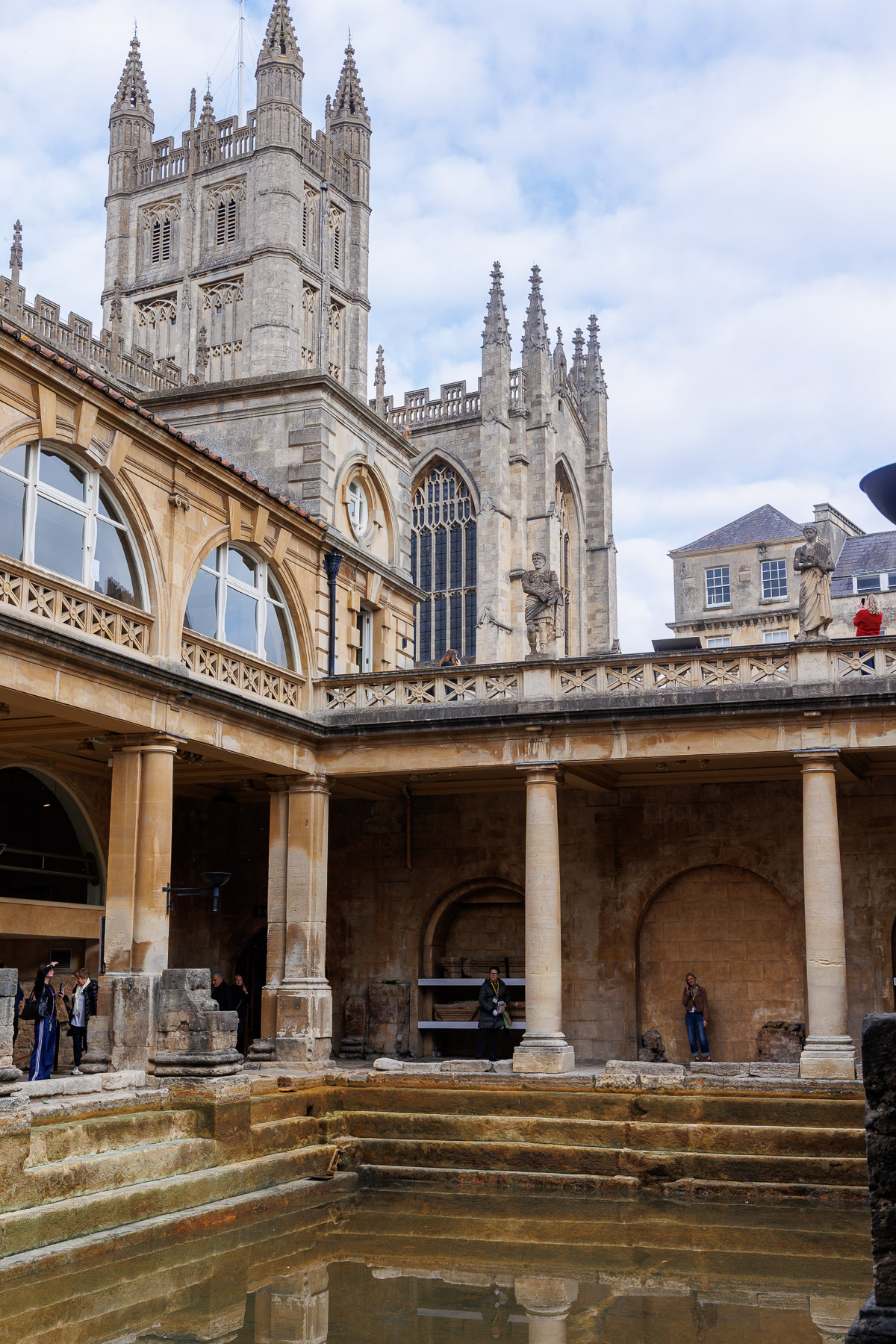
- Another view of the baths, including the abbey in the background.
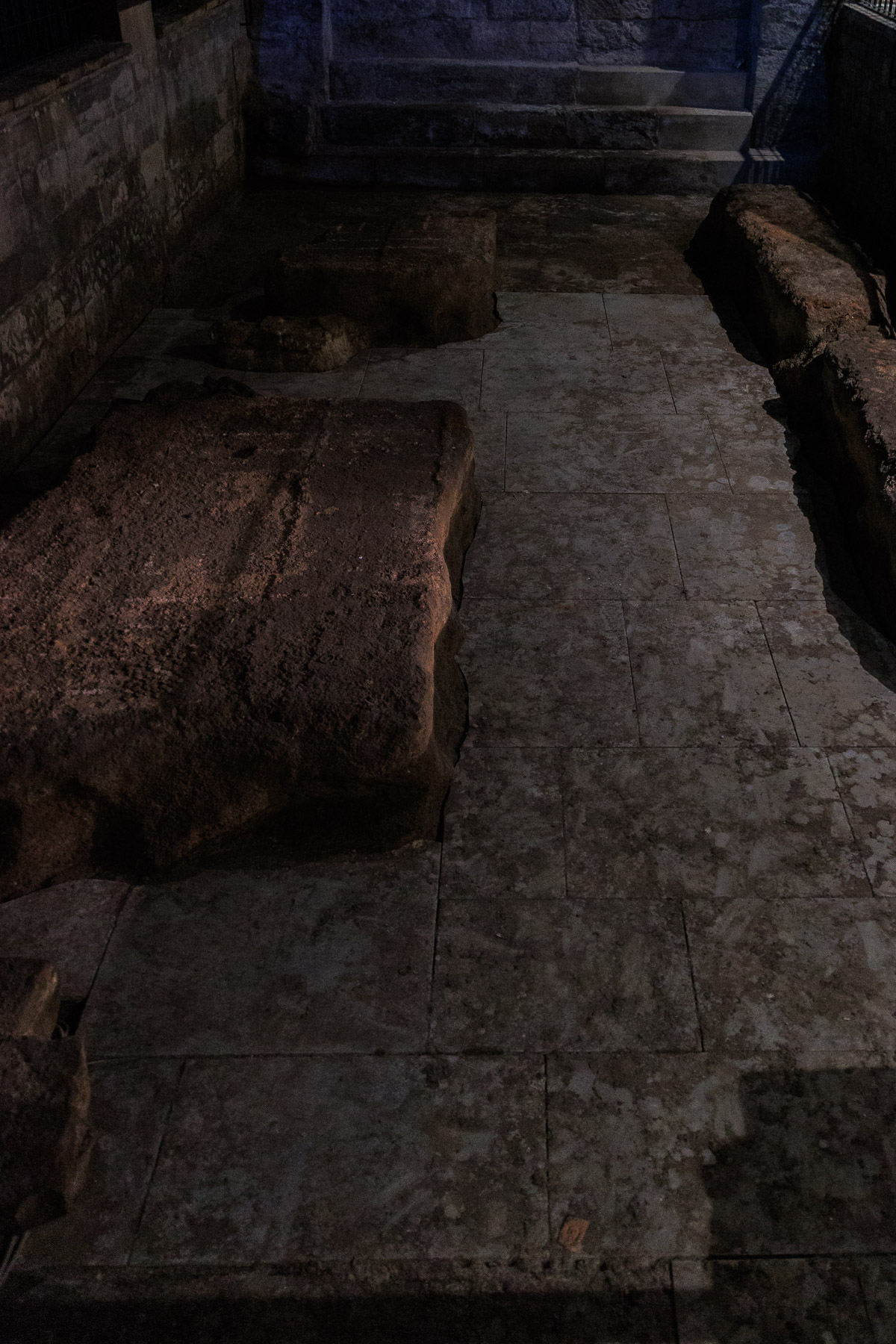
- There are more than one baths in the Baths. Originally co-ed, the baths did eventually become gender specific. The women's baths were indoors, with no windows. The room was lit by tea lights brought in by the women. While it now has electric lights, the lighting level is kept as it was when illuminated only by the tea lights.
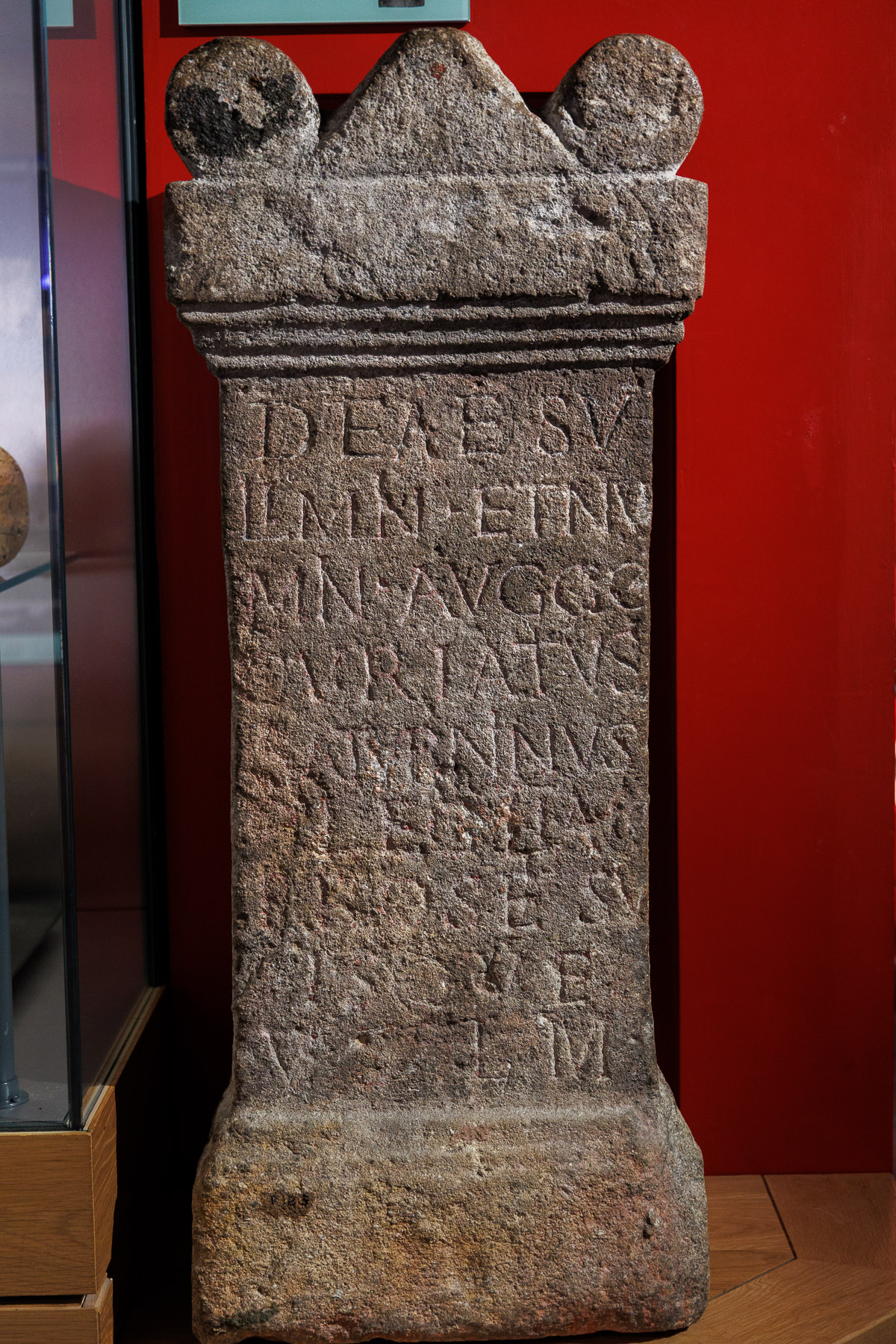
- There are quite a few artifacts to the various Roman gods and goddesses. This one, in Latin, translates to: To the Goddess Sulis Minerva and to the deities of the two emperers Gaius Curiatius Saturninus, Centurion of the Second Legion Augusta, willingly and deservedly fulfilled his vow for himself and his family.
The weekend was spent at the retreat, with Ellen working on her counted cross-stitch. I wound up taking photos of the retreat.
- One of the highlights for me was a presentation on Saturday evening by Tom, formerly the Royal Navy photographer stationed on Queen Elizabeth's Royal Yacht. His presentation included plenty of photos along with the stories behind them.

On Monday following the weekend retreat we moved to London. The weather wasn't great, so we did some shopping and didn't take any photos.
Shakespeare's Globe Theater was the main event on Tuesday. After a great tour, we went to Trafalgar Square for lunch and a little sightseeing.
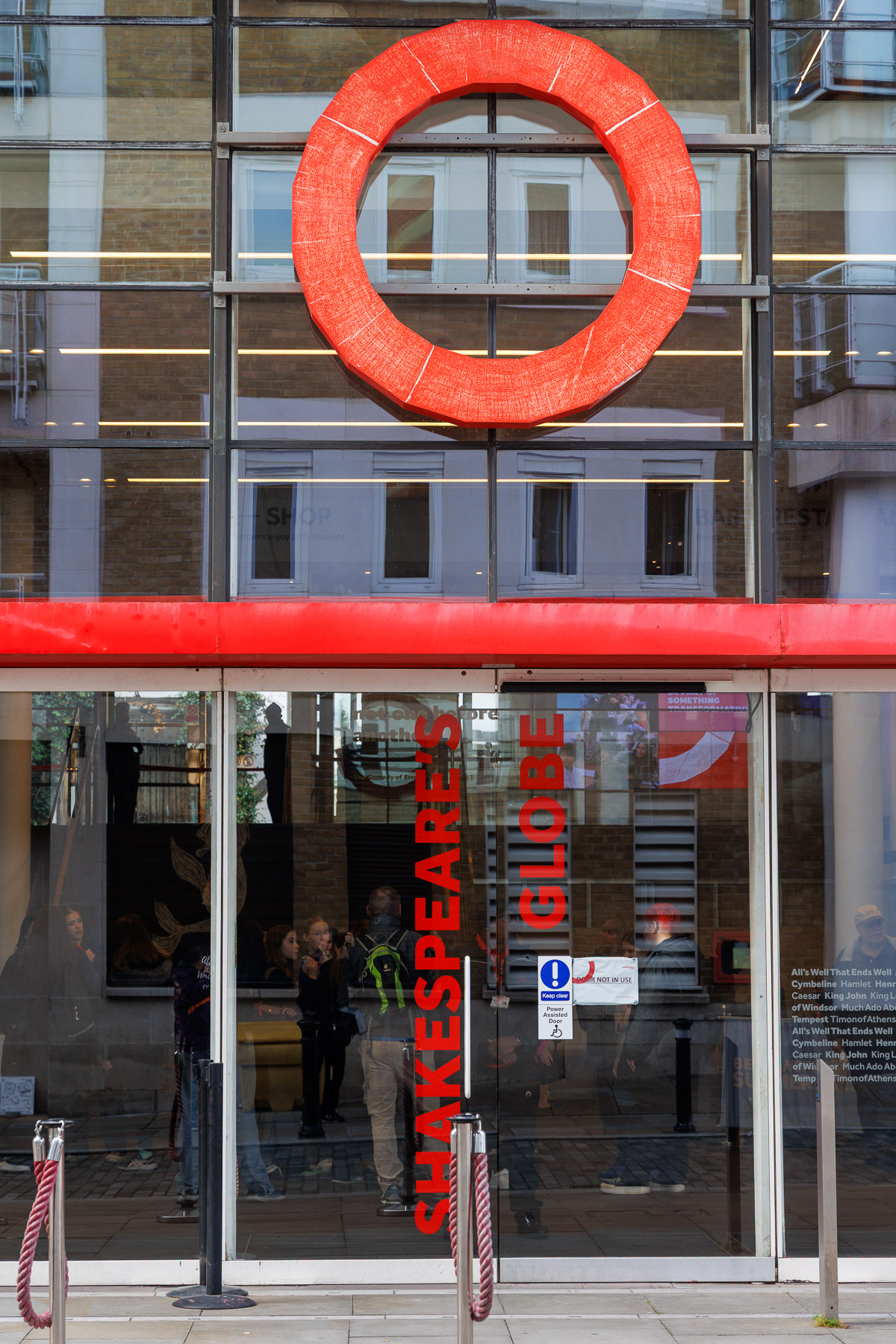
- The main public entrance to the Globe Theater. We used a different entrance for the tour.
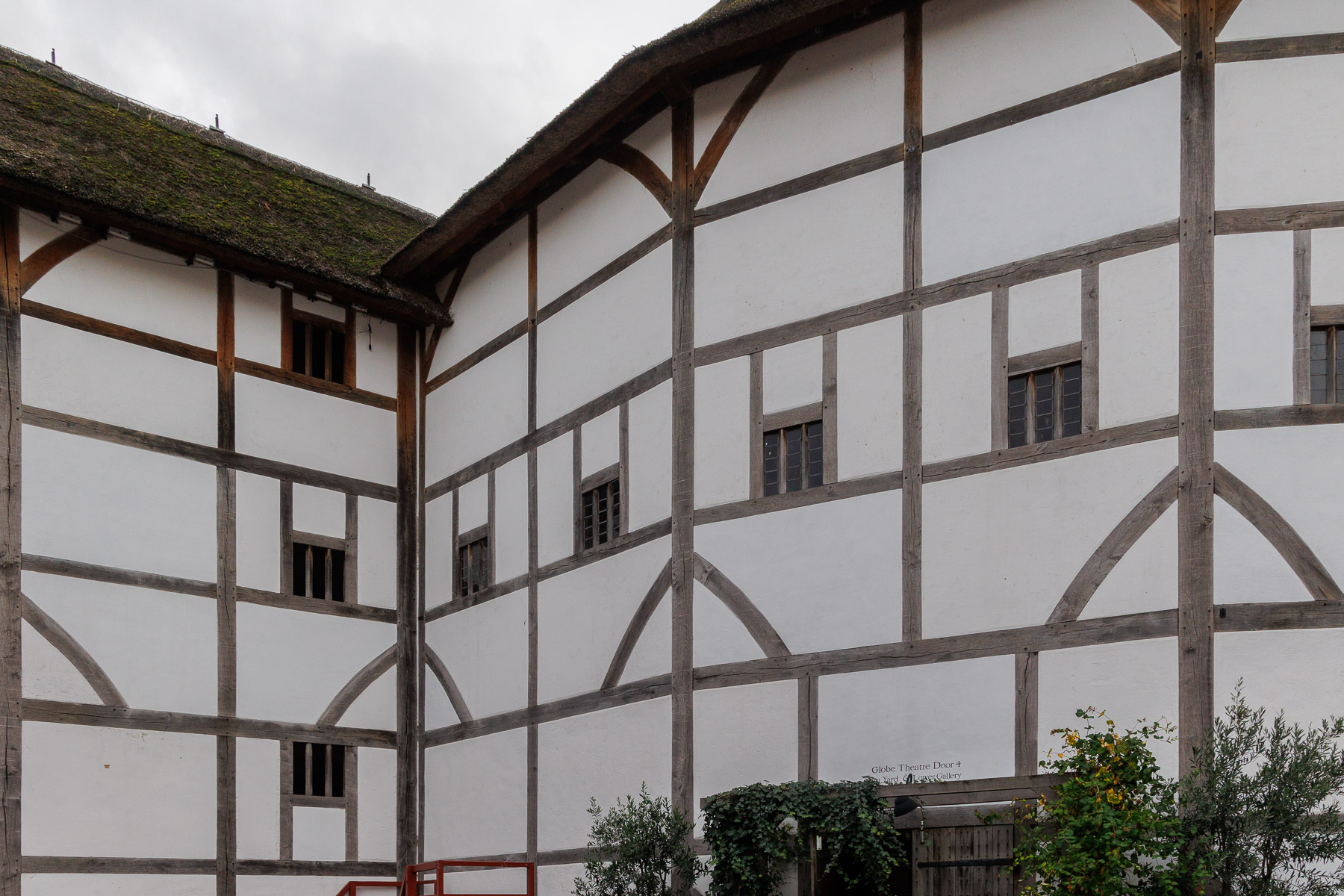
- Part of the exterior of the Globe Theater from an outdoor patio. This isn't really the original, but replicates Shakespeare's theater based on the best available information.
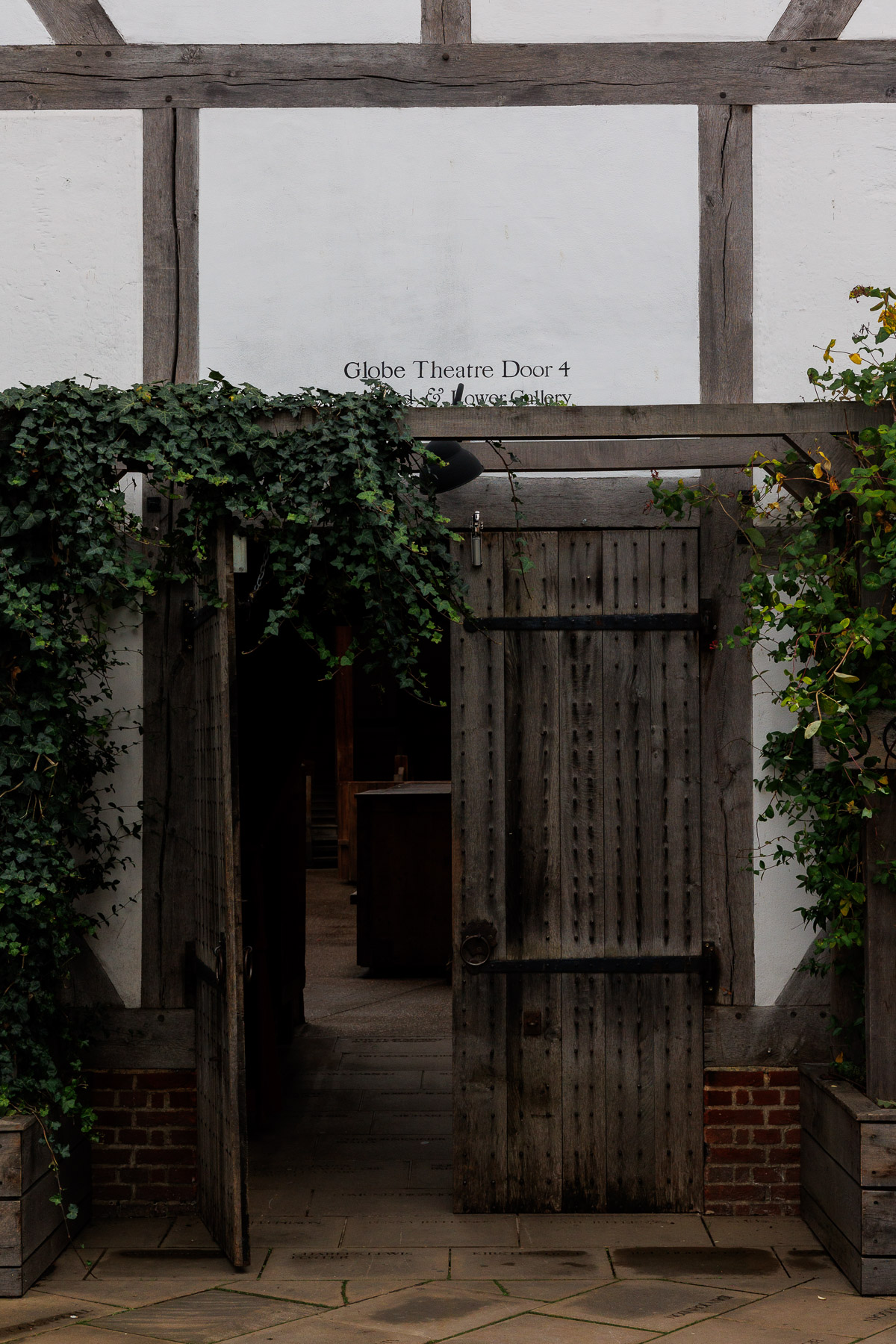
- One of the original entrances to the Globe Theater.
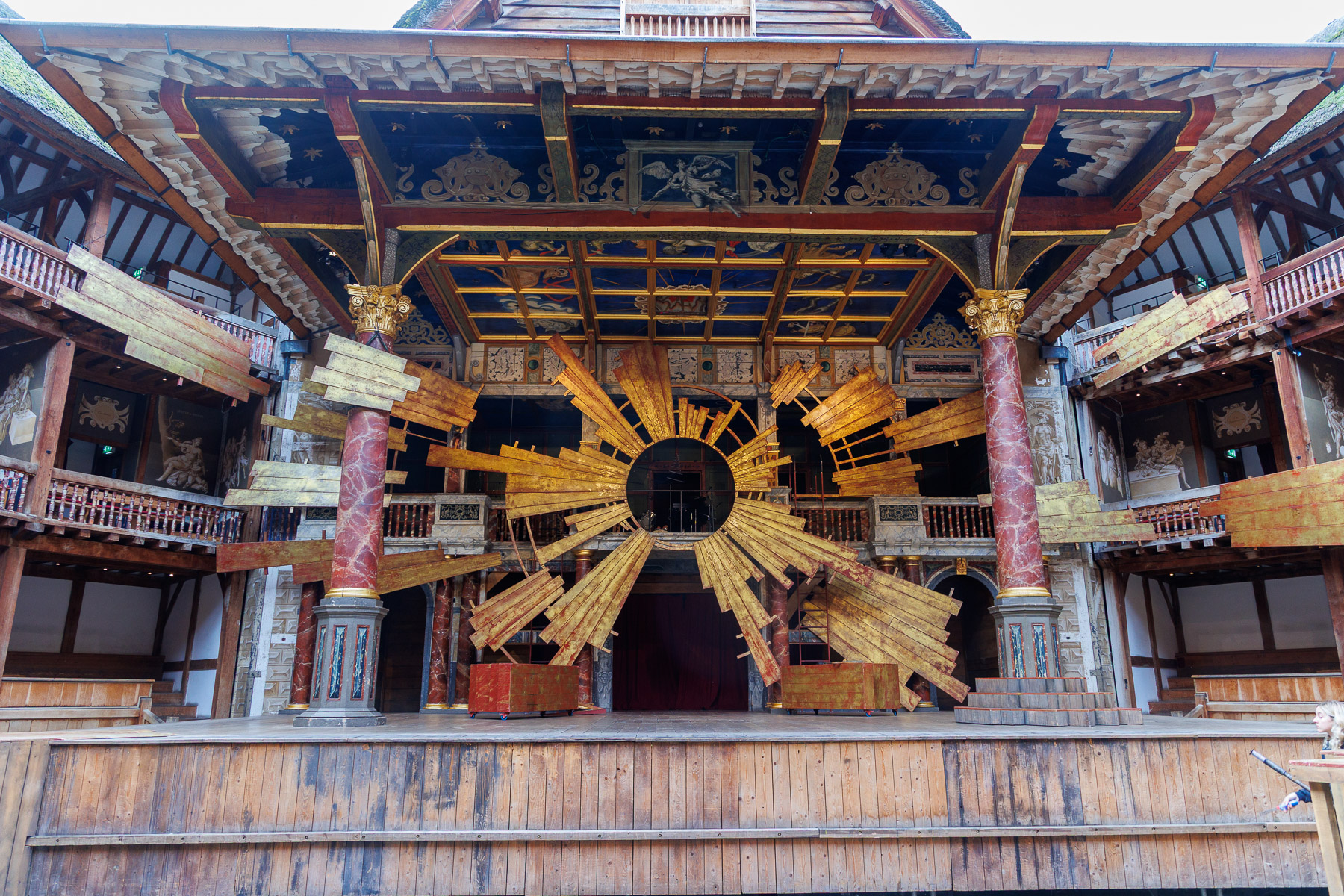
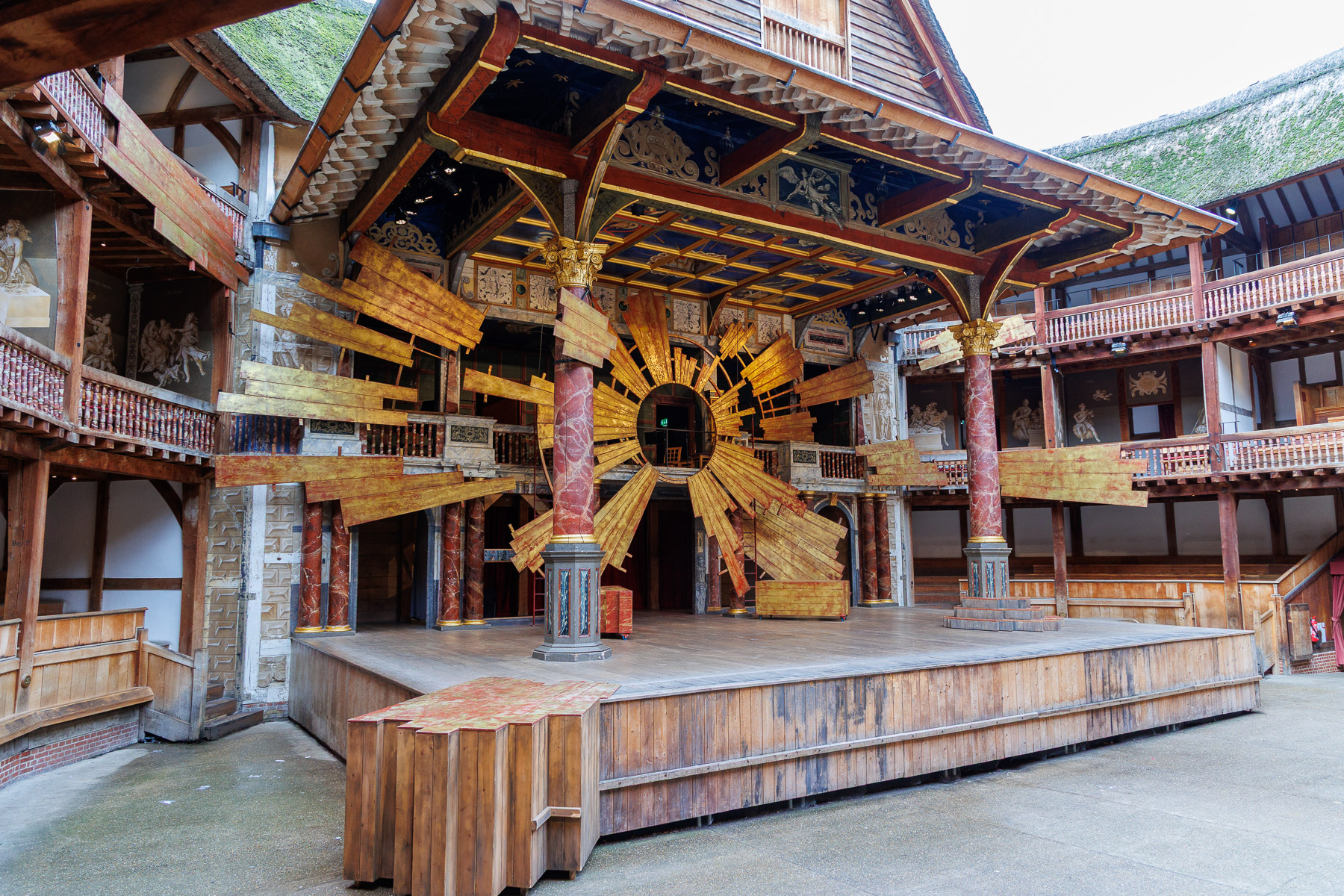
- The main stage from the area in front of the stage. There were no seats in this section. People would stand, in close quarters, to watch the performances.
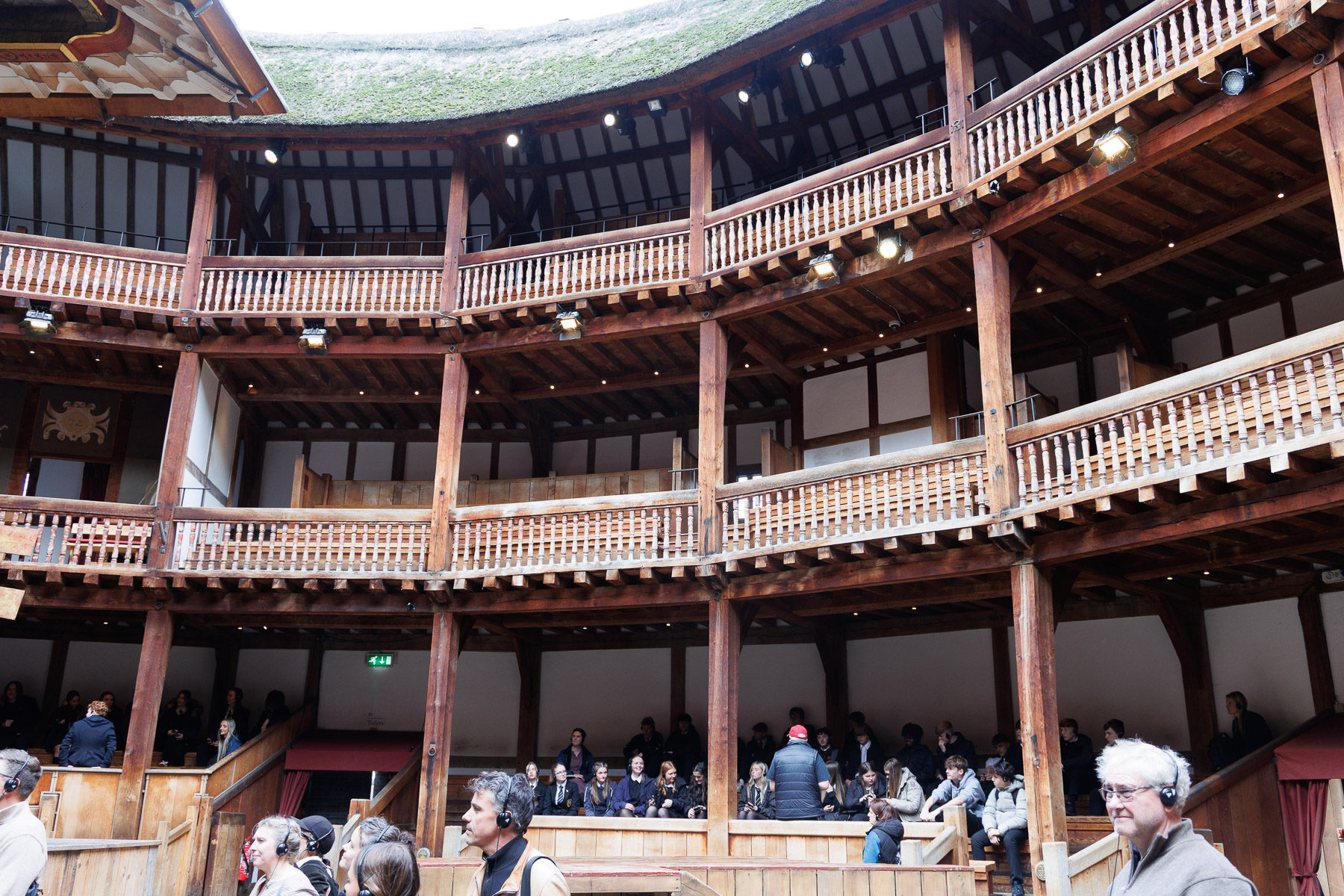
- There are 3 levels of seating surrounding the stage. Each level is only a few rows deep.
- A view of the stage from one of the seats.
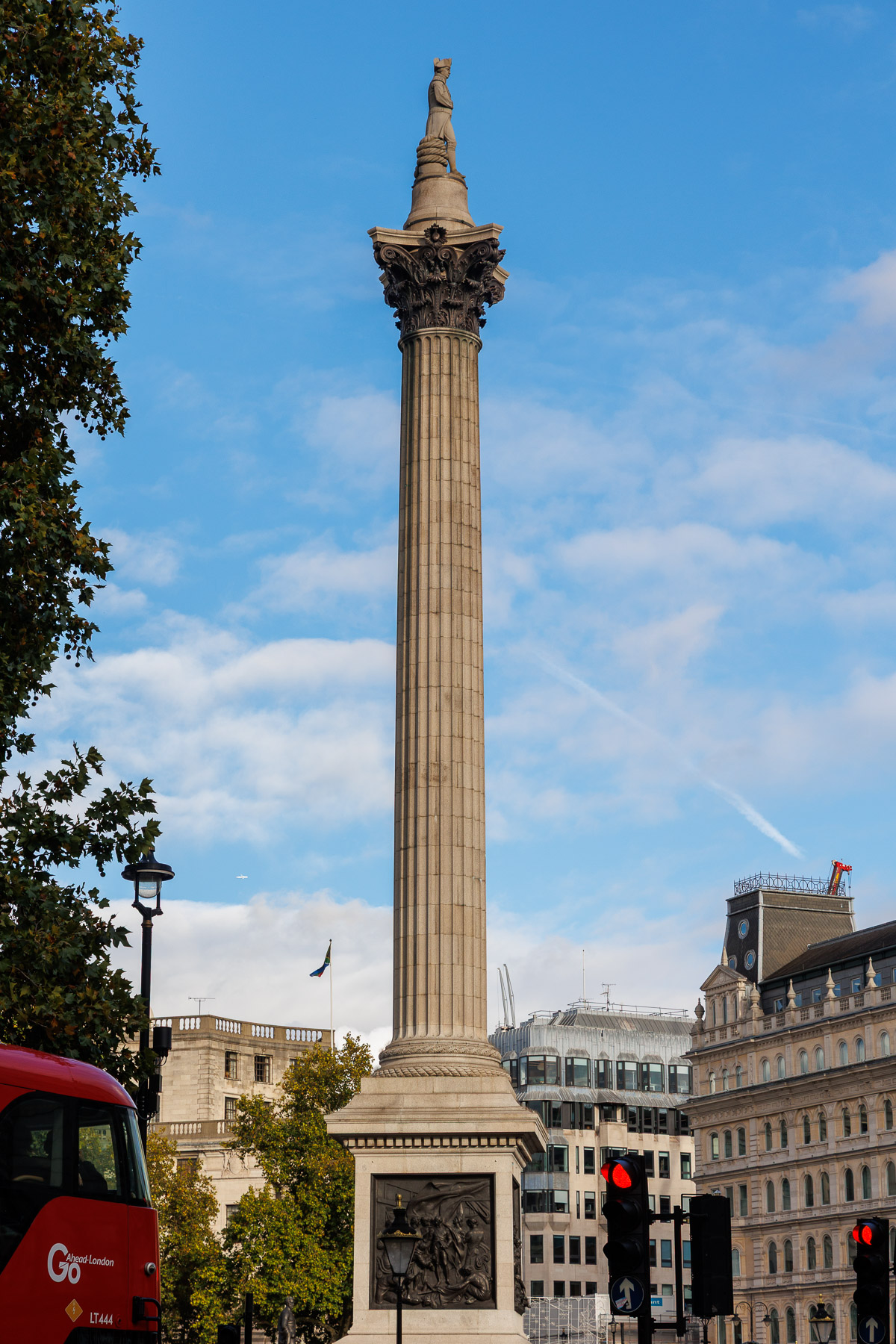
- After touring the Globe Theater, we went to Trafalgar Square for lunch and exploring the area. This is Nelson's Column, honoring Admiral Nelson, after his victory in the Battle of Trafalgar in 1805.
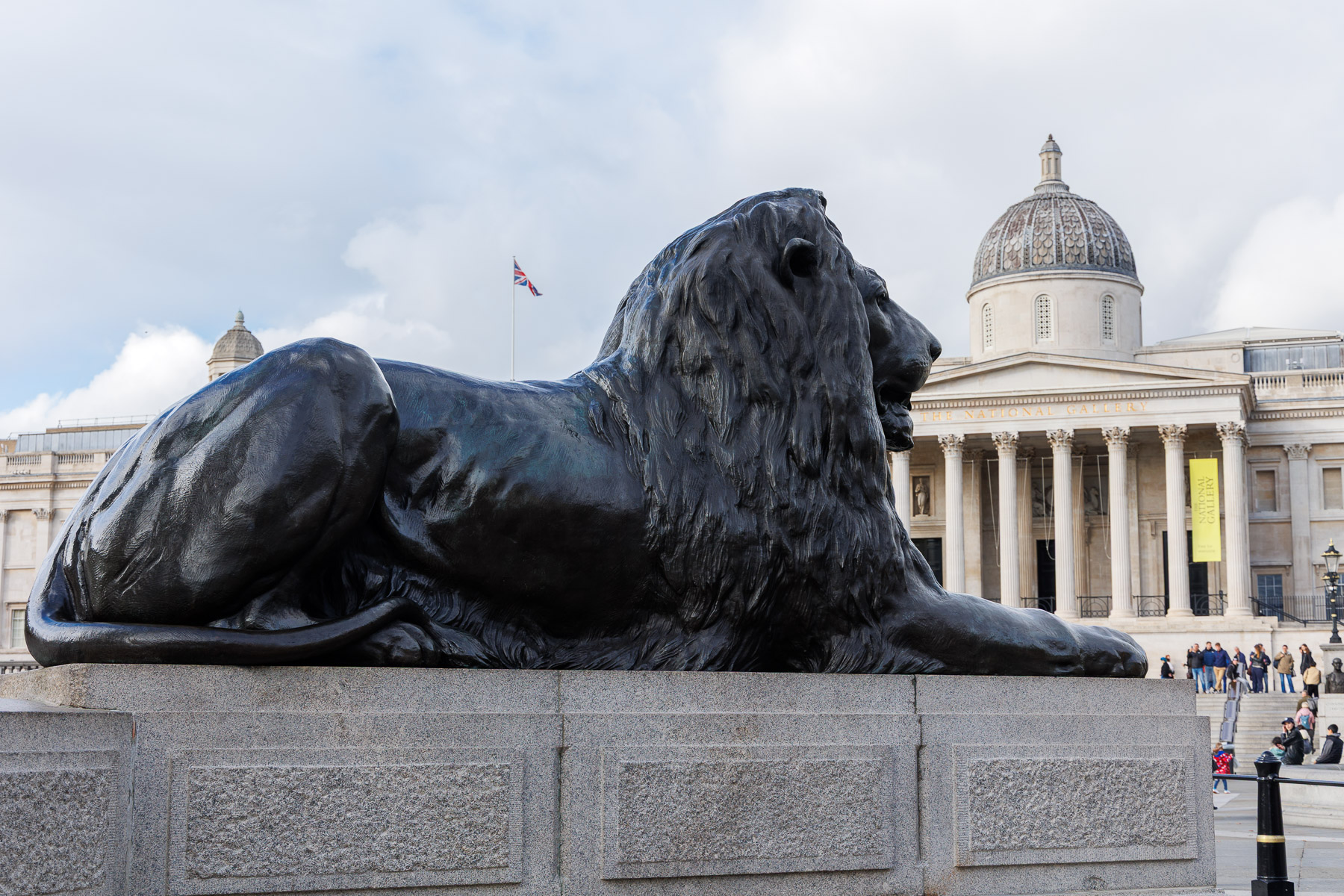
- One of the lions protecting Nelson's Column. The National Gallery is in the background.
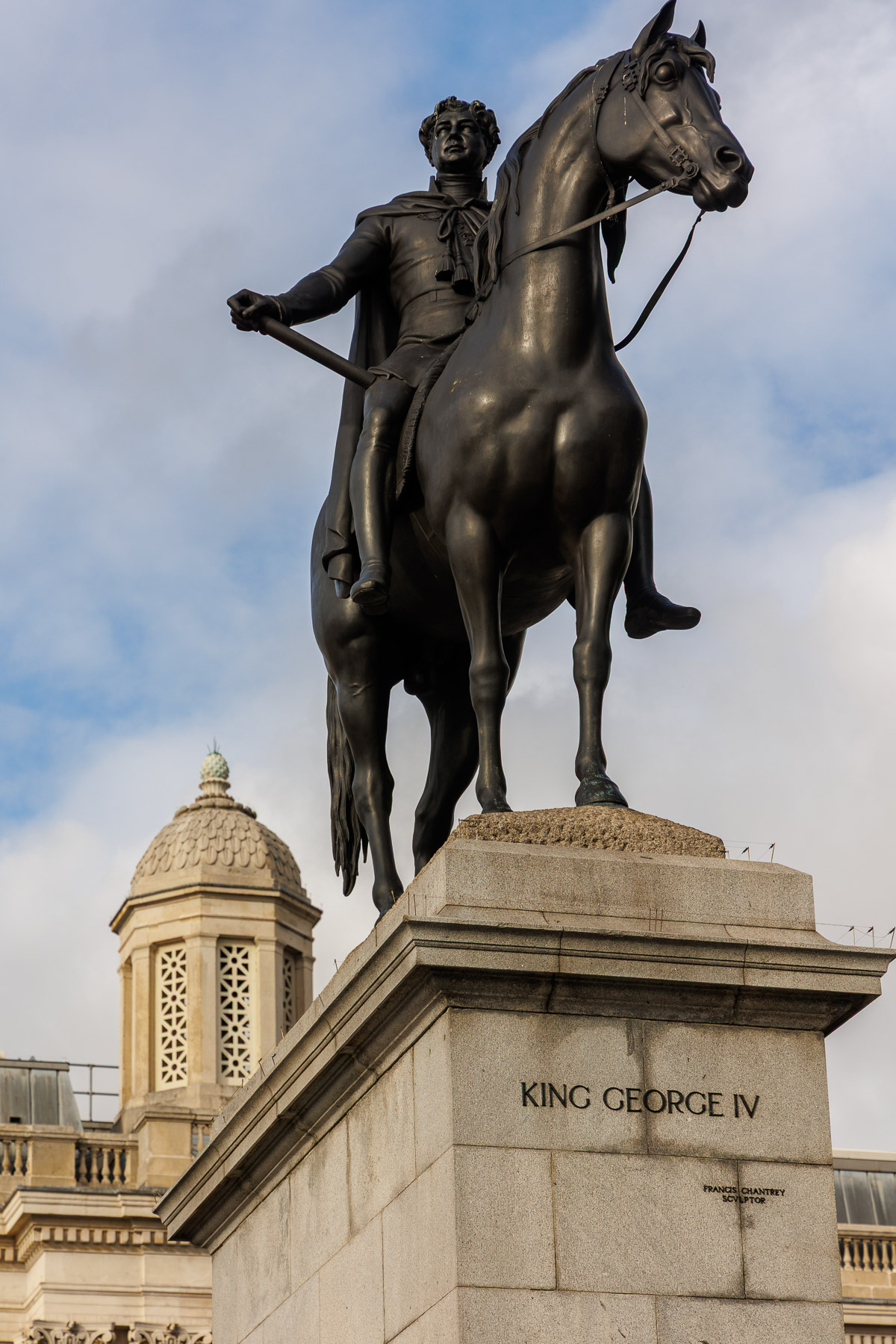
- King George IV outside the National Gallery at Trafalgar Square.
On Wednesday, we visited the famous Tower of London.
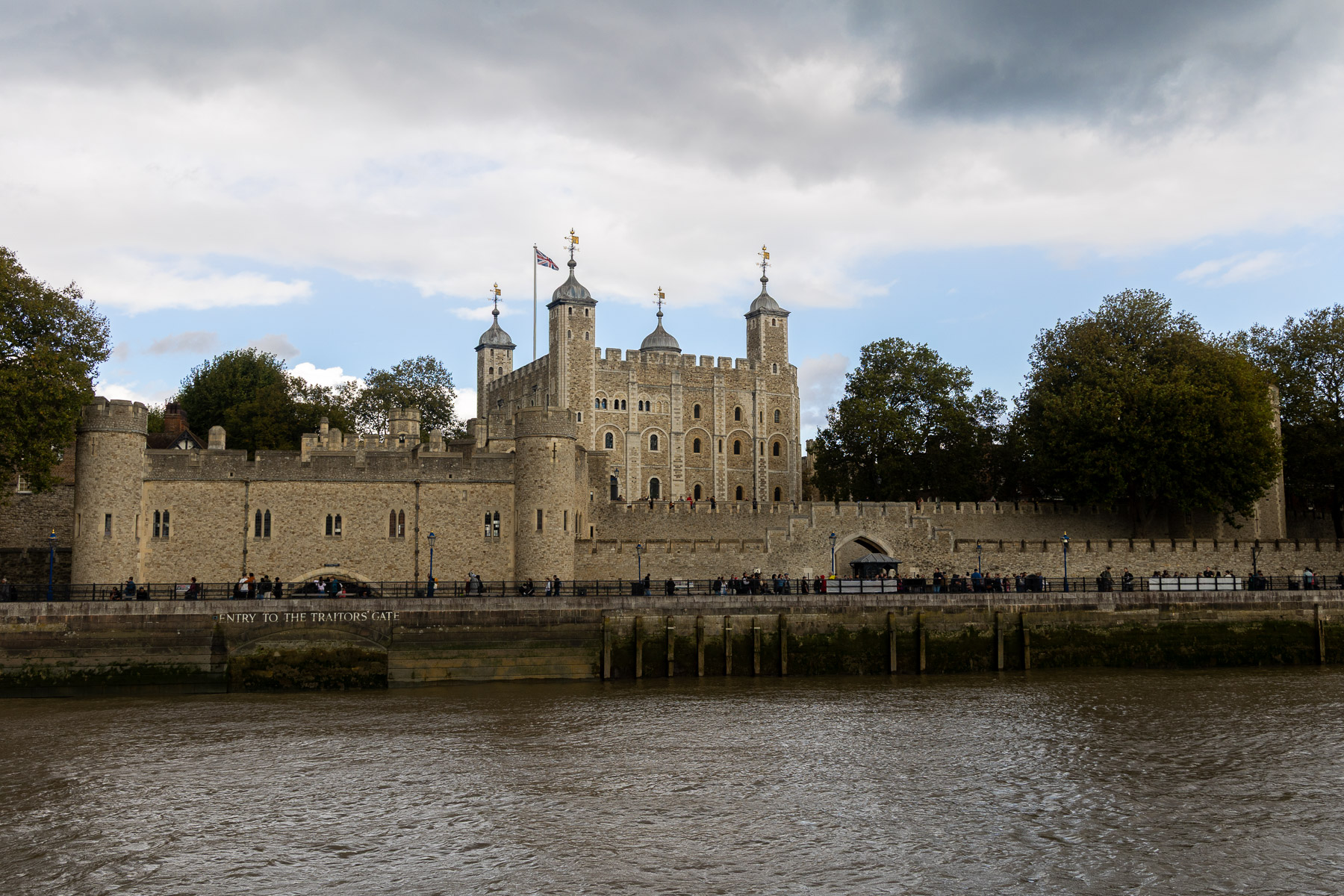
- The Tower of London. This photo was taken from a boat in the Thames during our 2023 London trip. The Tower has been there for centuries, so a 2-year old photo is still relatively current.
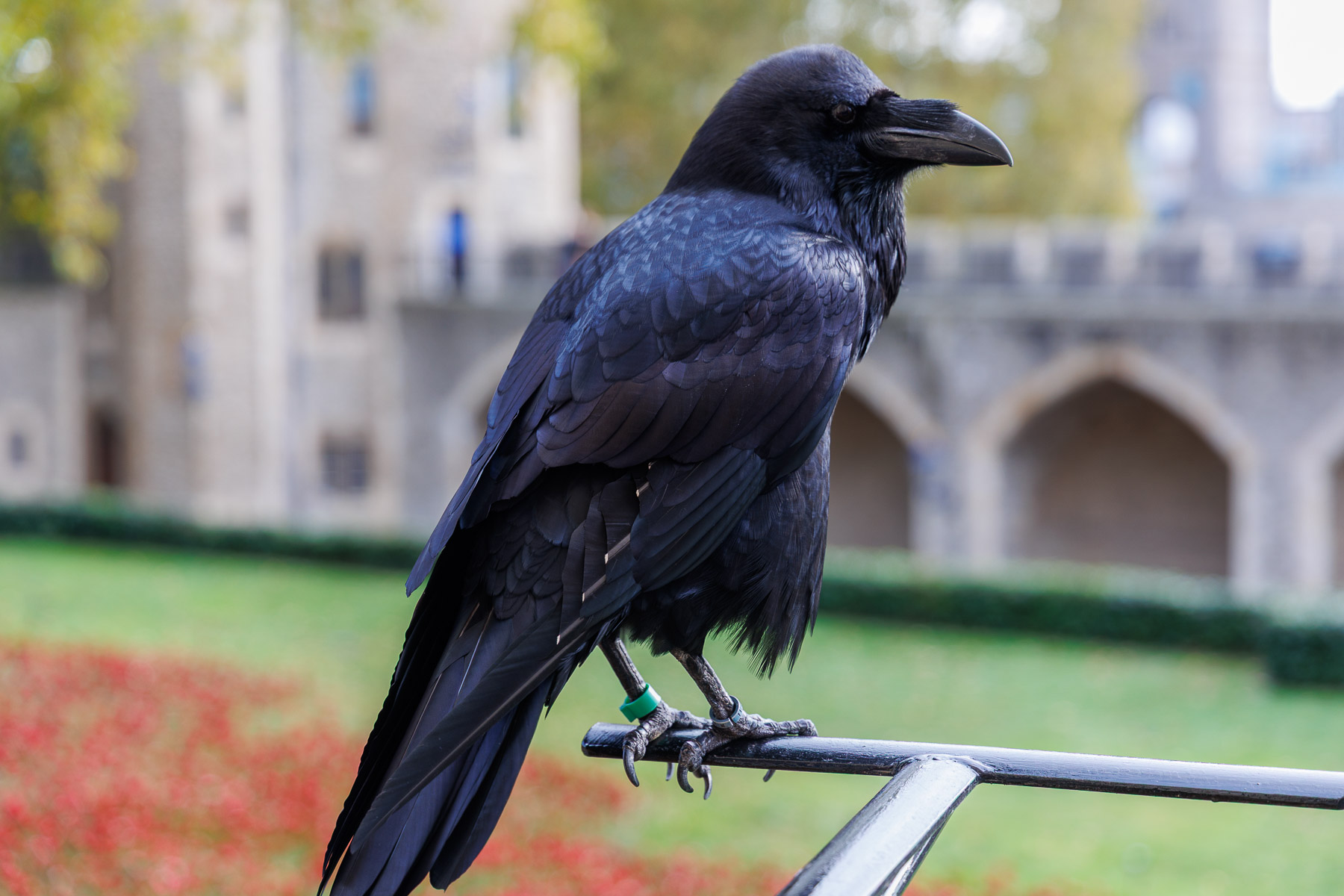
- One of the famous Ravens at the Tower of London.
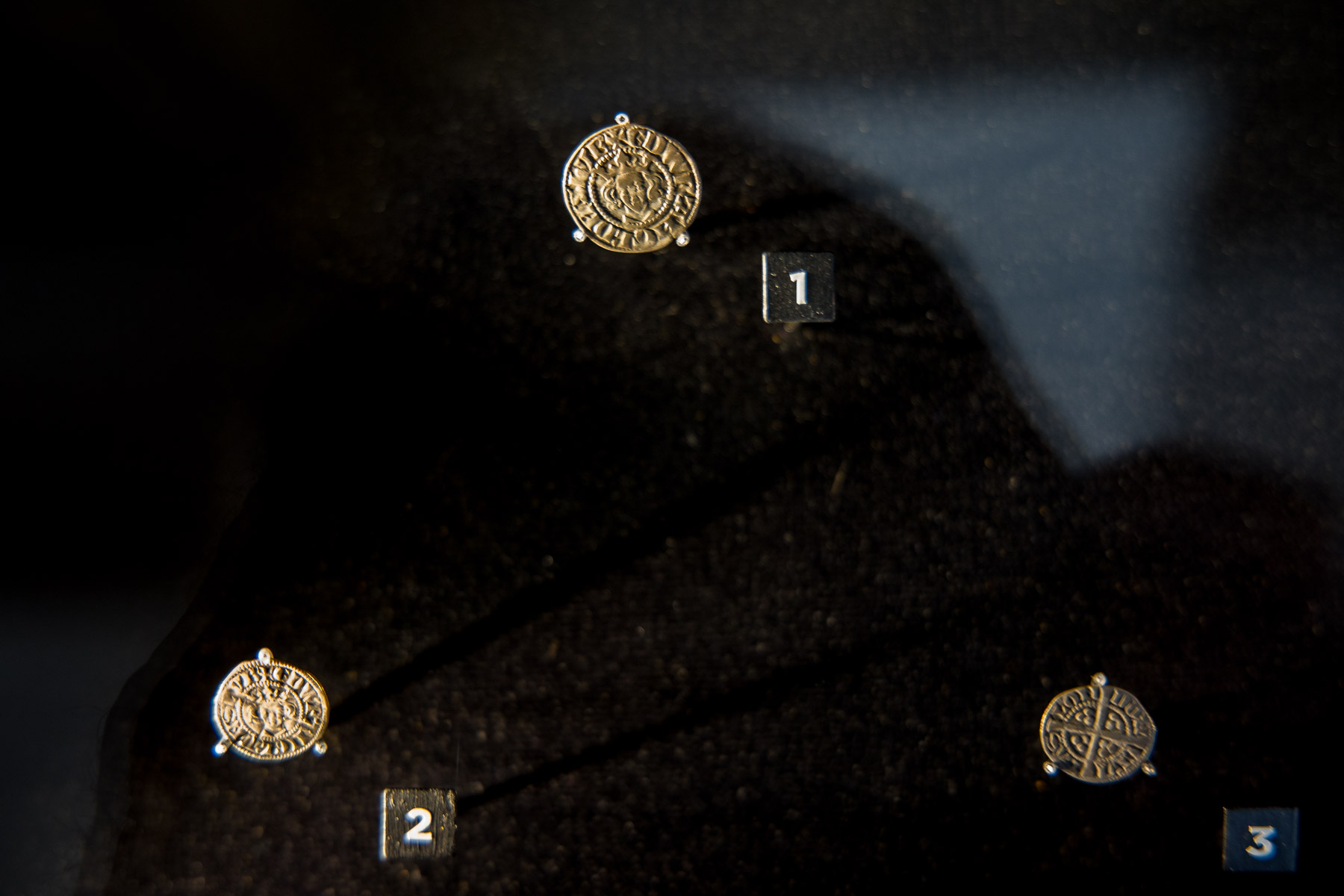
- While we were waiting for the tour, a guide suggested we visit the mint (part of the Tower), where British coins were made centuries ago. #1 is an Edward I penny. #2 and #3 are Edward I halfpennies. All from 1279.
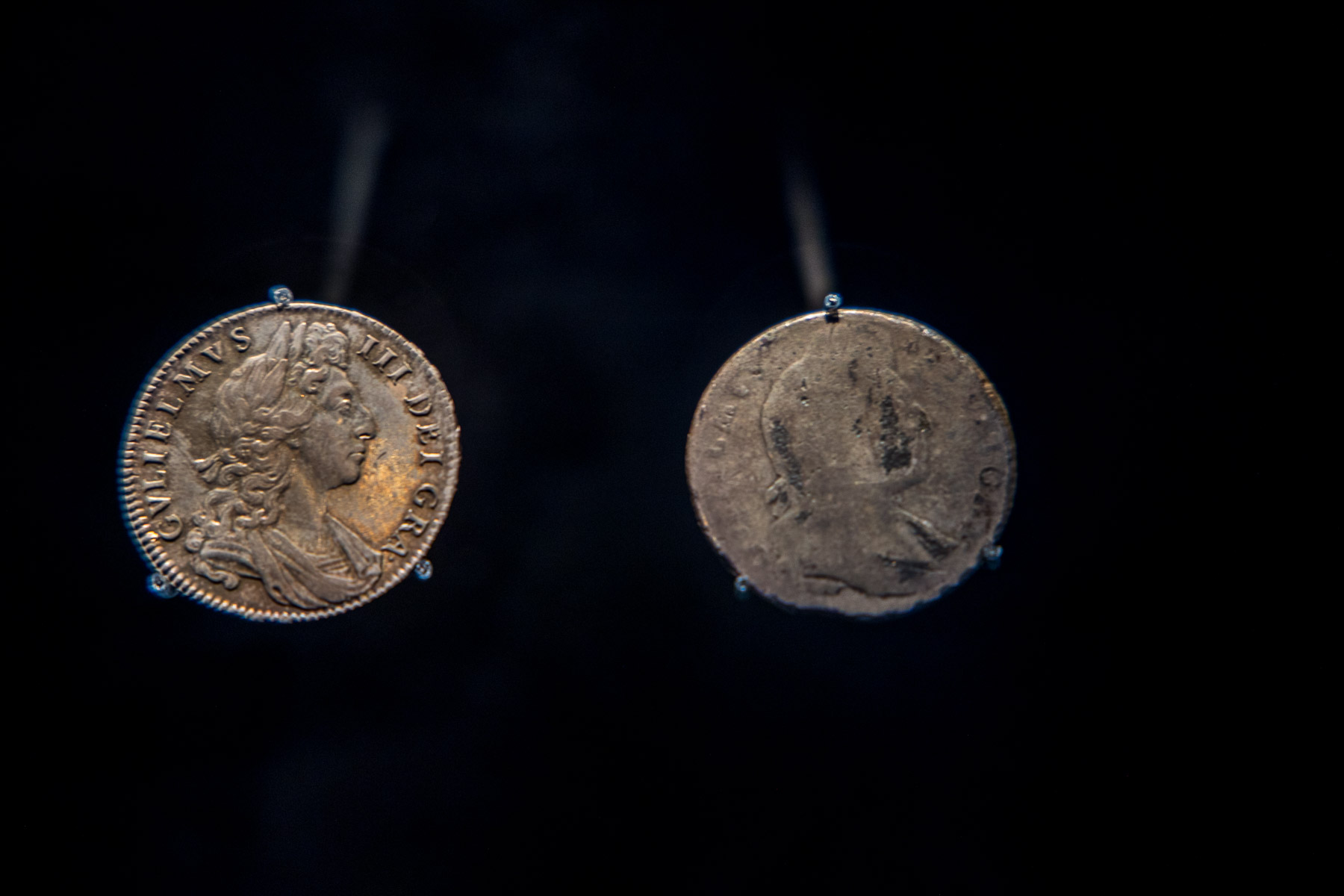
- Counterfeiting was an issue even then. Can you tell which of these William III halfcrowns, c1690, is real and which is fake? (Hint: the one on the left is real.)
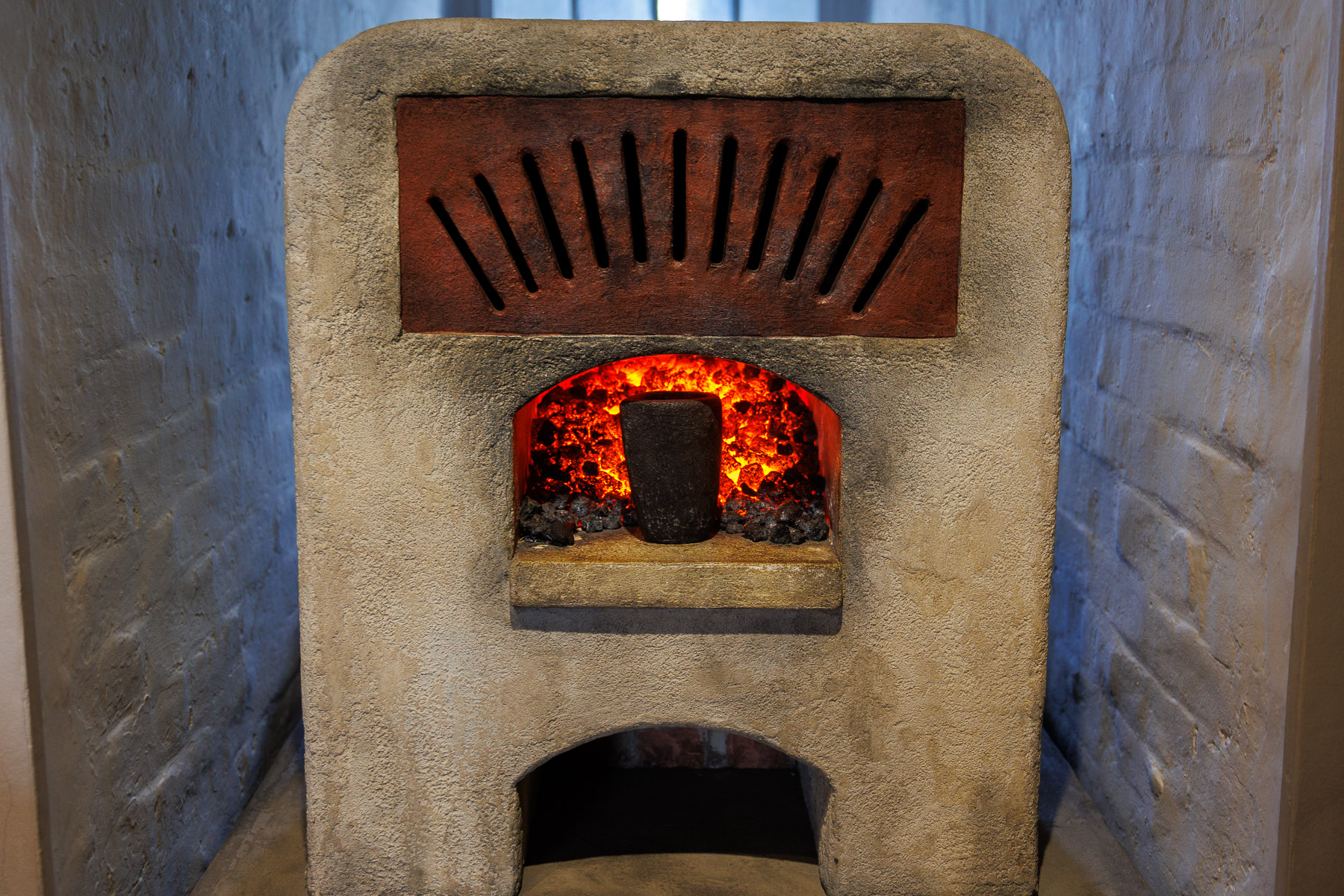
- A furnace used to melt the metal for the coins.
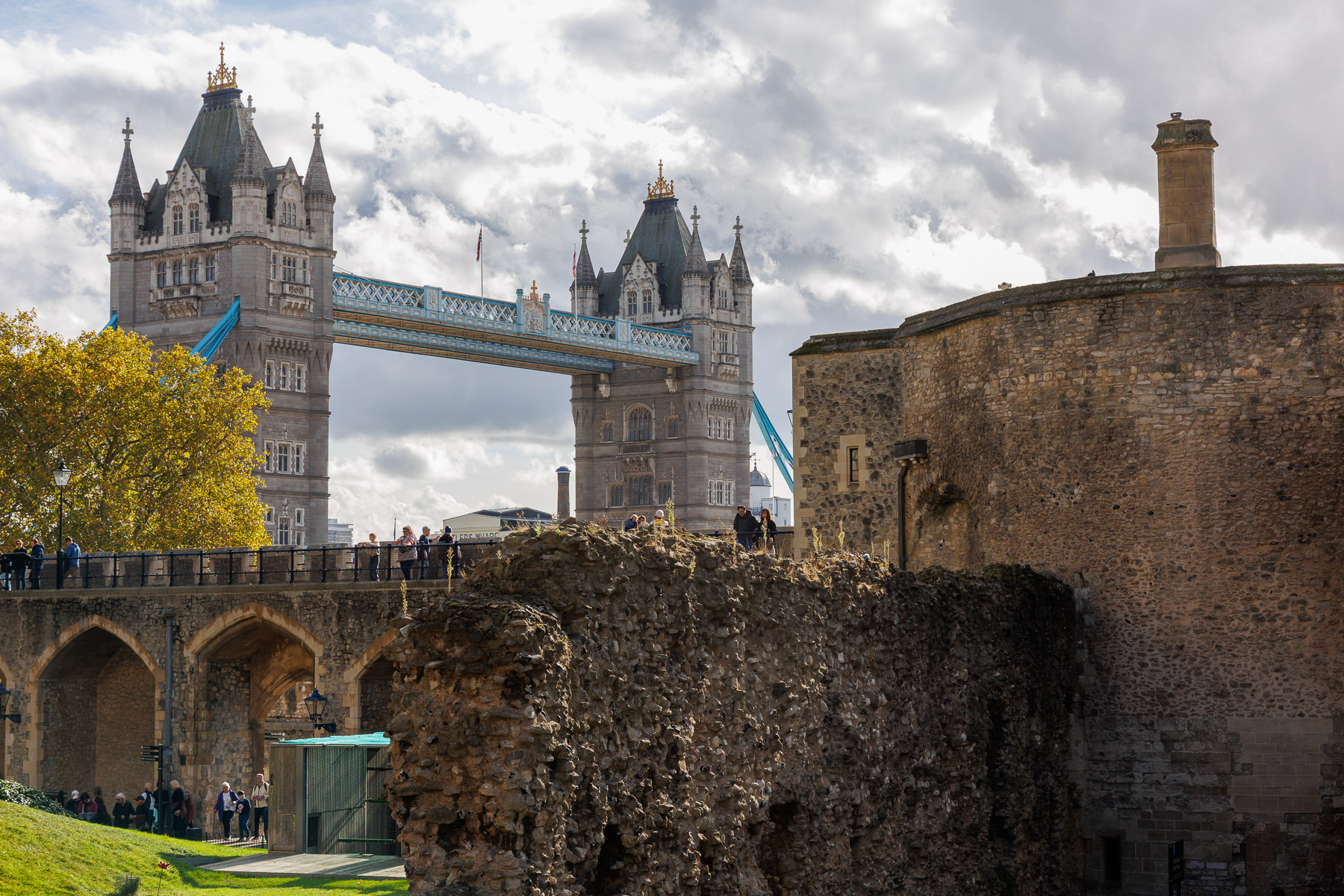
- A view of the Tower Bridge from inside the Tower of London.
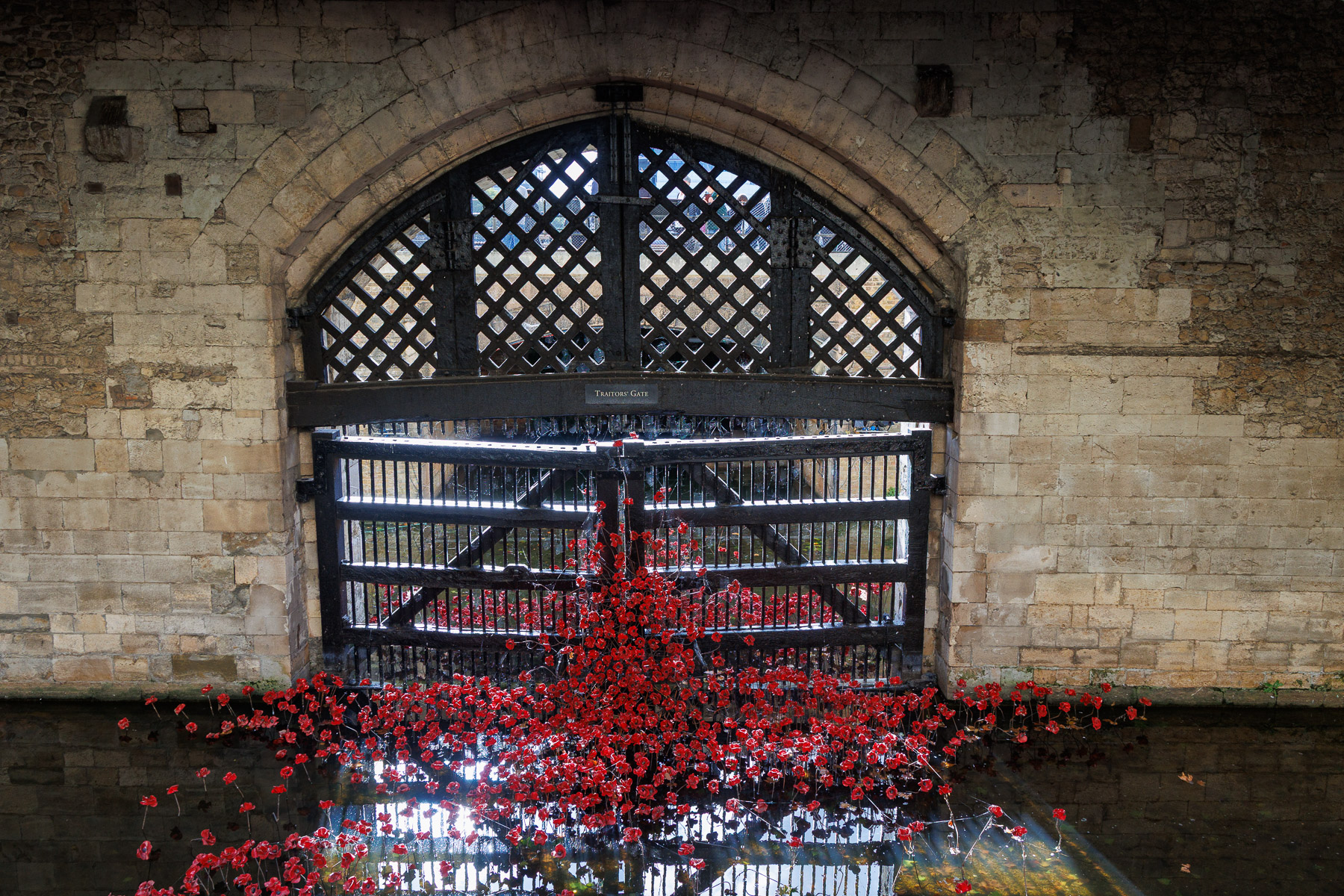
- Traitor's Gate. This opens to the Thames.
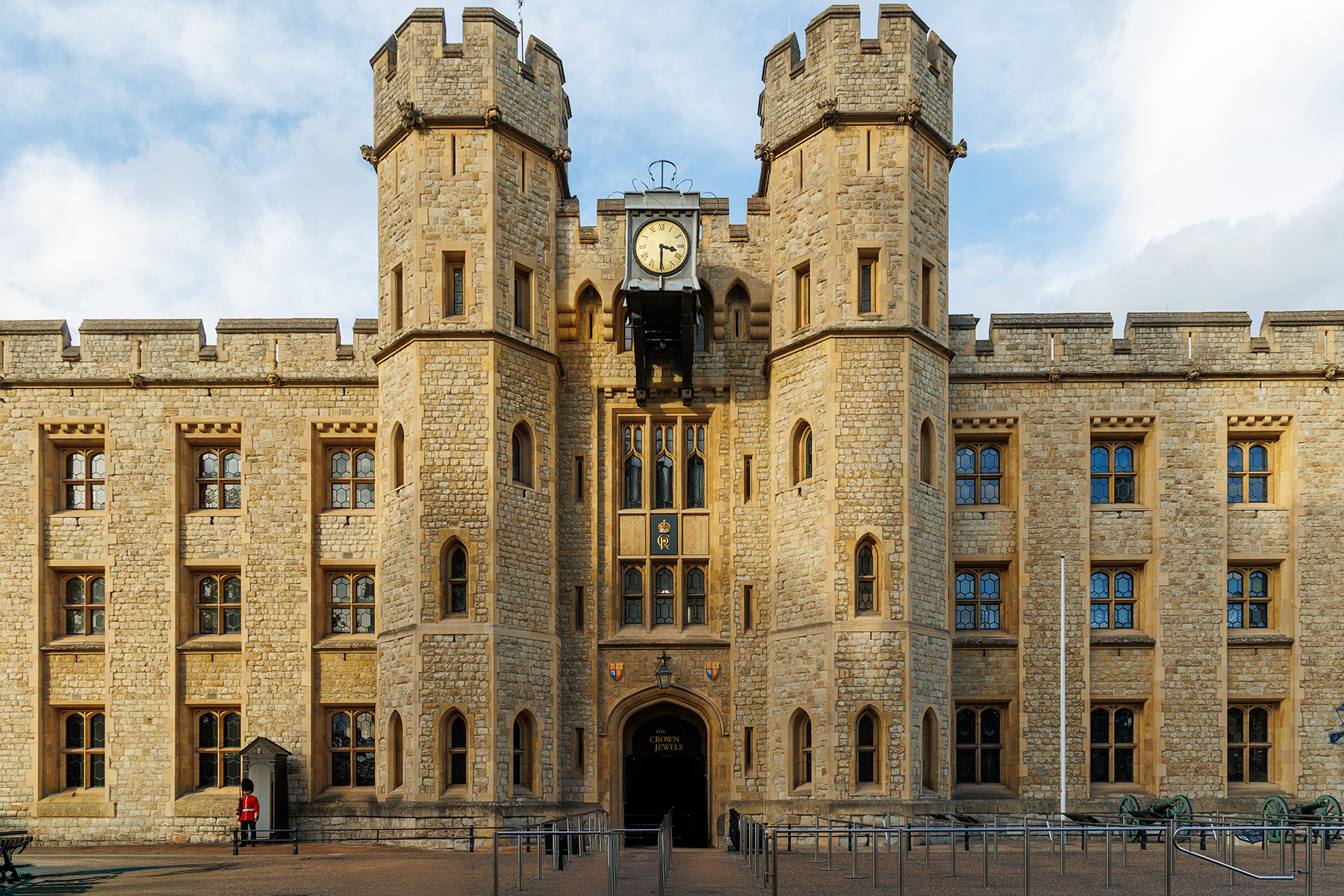
- The Clock Tower, where the Crown Jewels are stored. Of course, photos inside aren't allowed.
- The guards and canons guarding the Clock Tower.
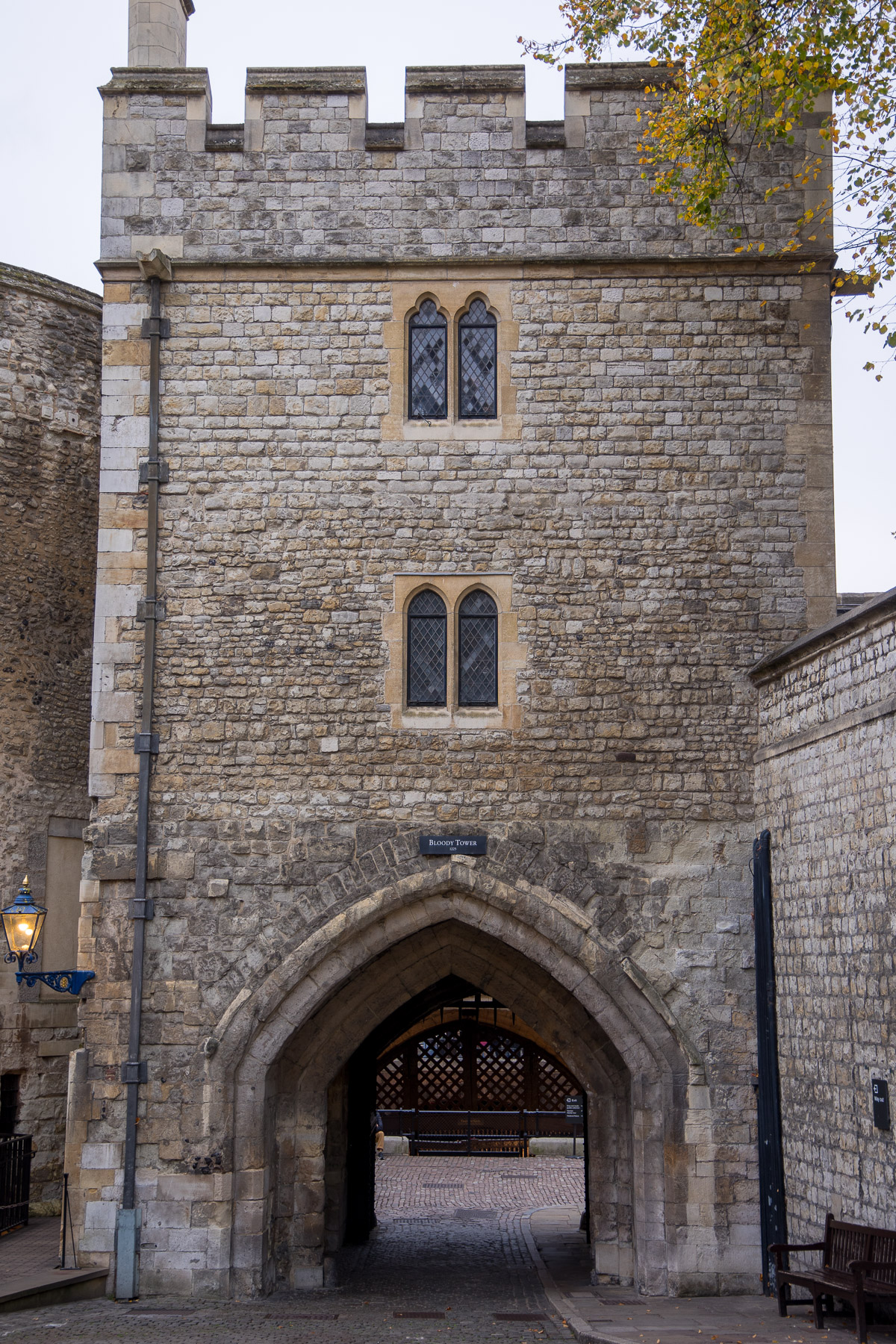
- The Bloody Tower at the Tower of London.
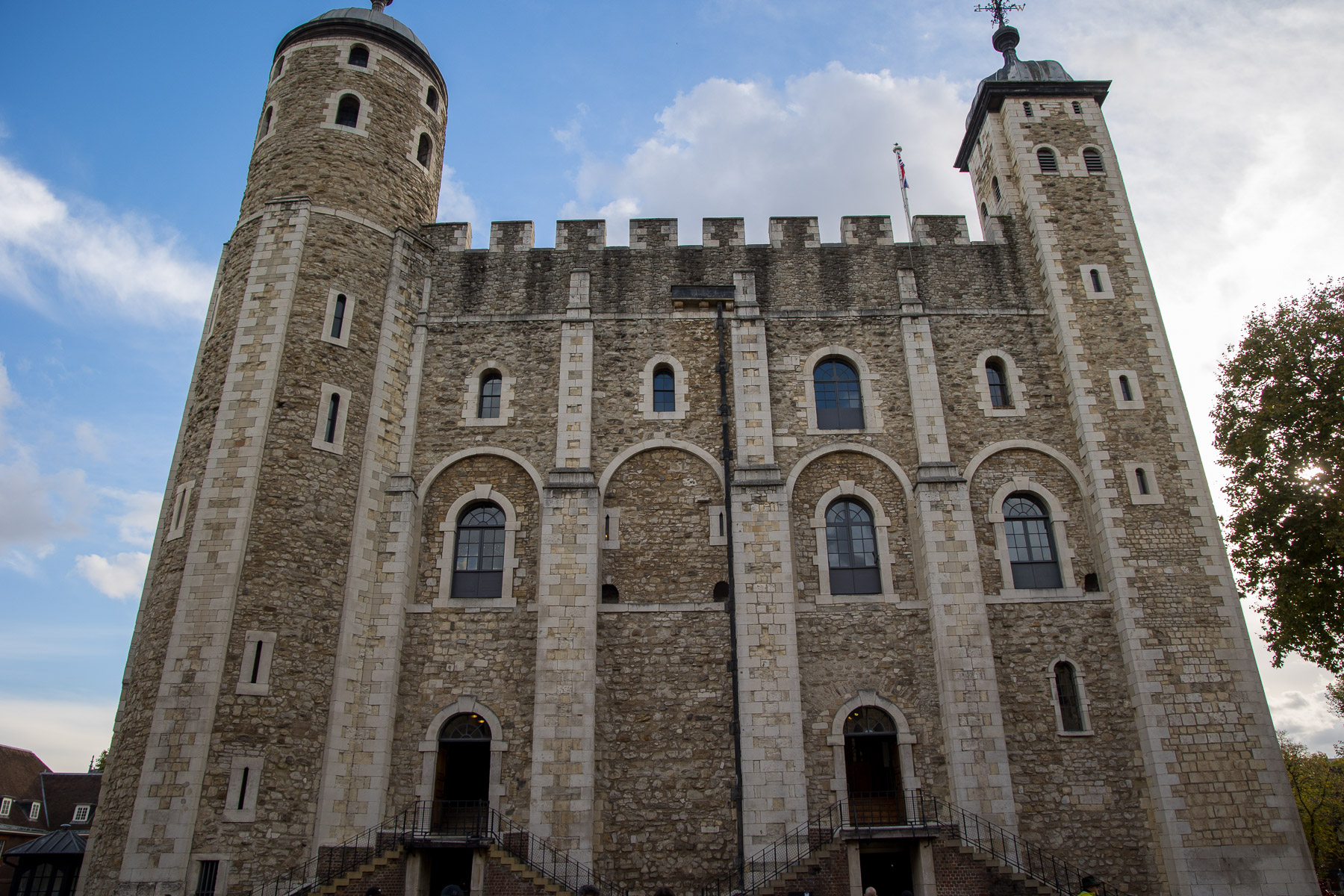
- The White Tower. There are quite a few exhibits within the White Tower, but the signs warn visitors about the 204 steps. That didn't stop us.
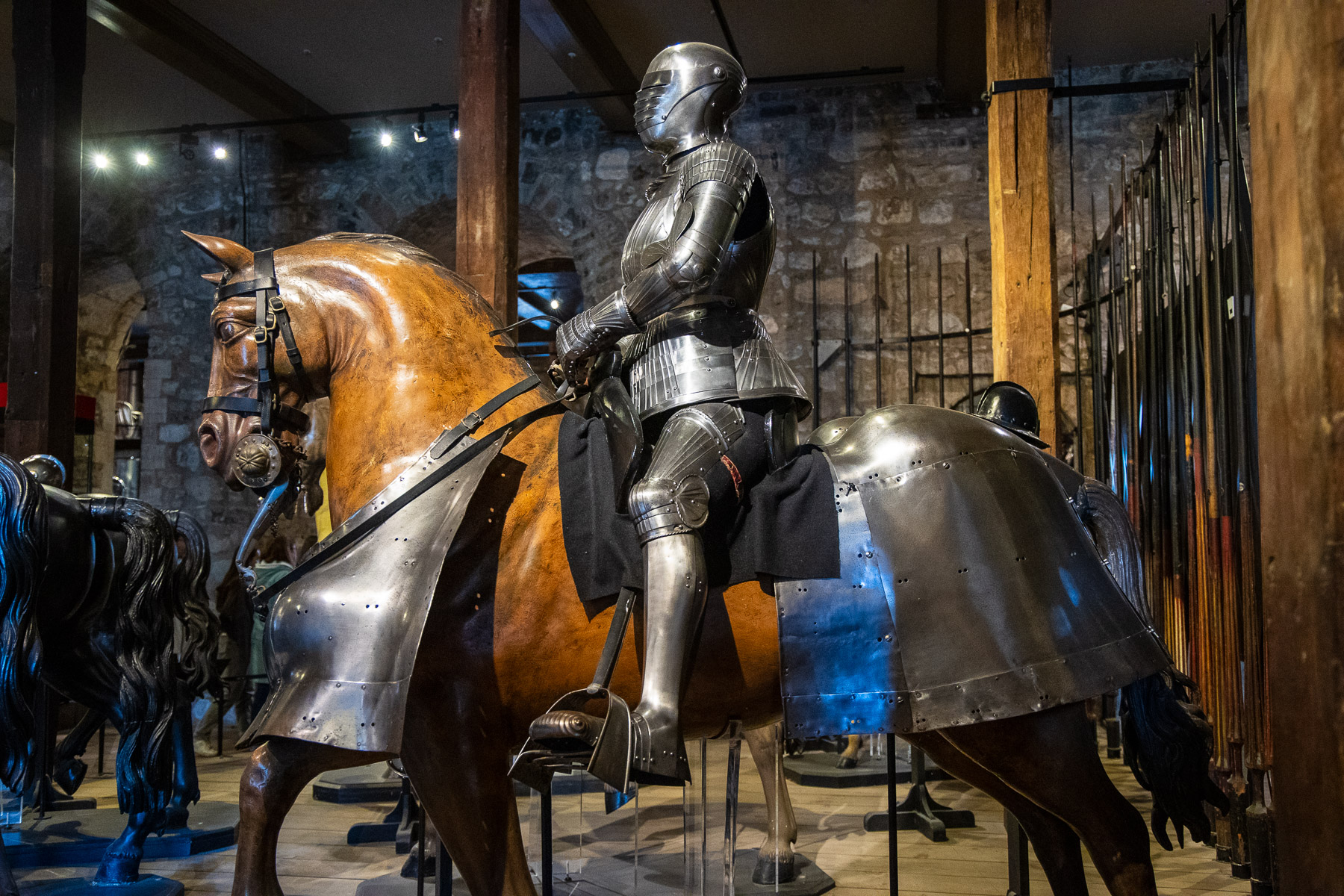
- In 1689, fourteen specially commissioned life-sized wooden horses and figures were delivered to the Tower of London. Dressed with arms and armor from the White Tower stores they created a famous public display – the Line of Kings.
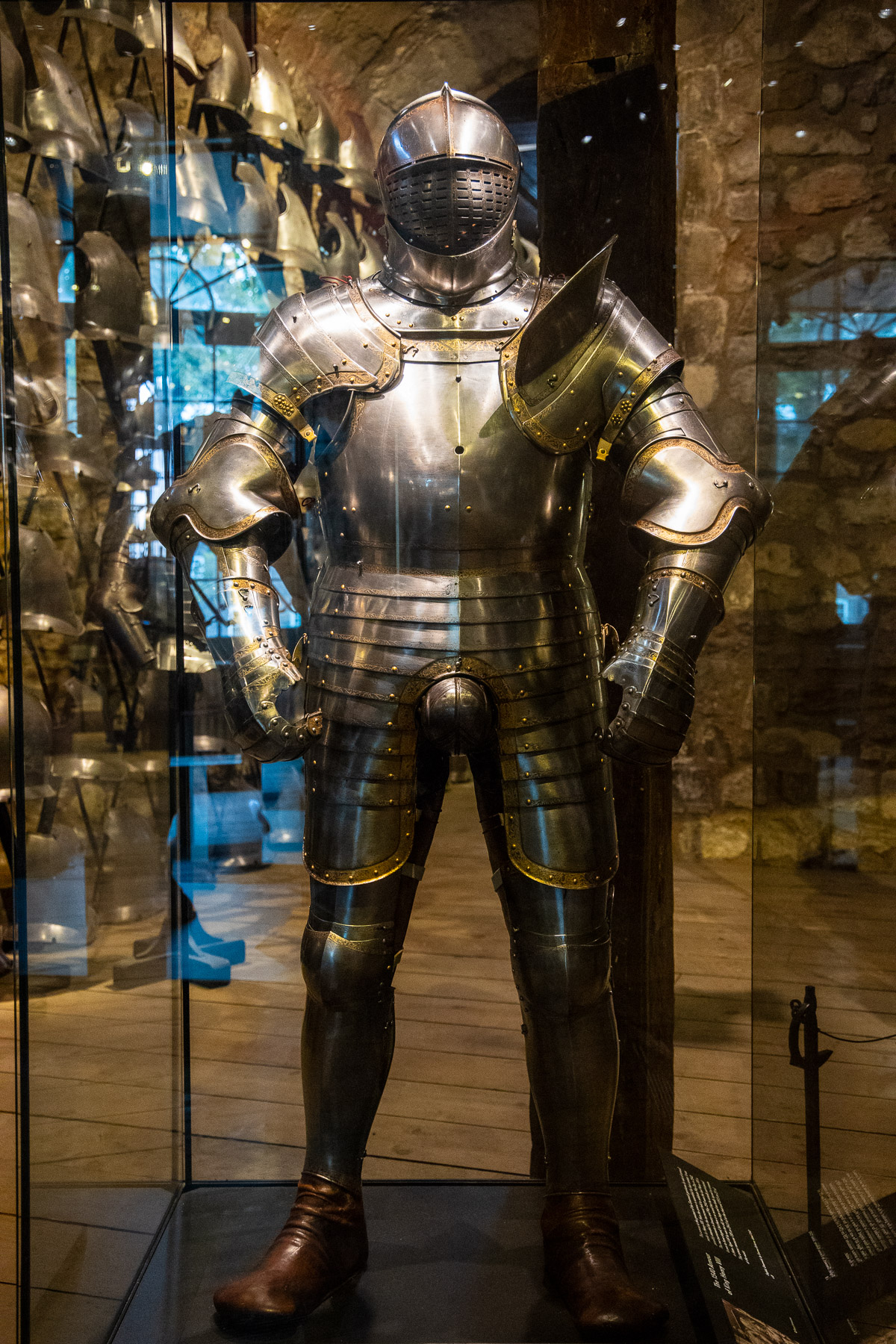
- The armor for King Henry VIII on display in the White Tower.
- The view looking out one of the narrow windows in the White Tower.
- One of six Norman toilets (garderobe) in the White Tower. Waste fell into ground pits on the north and north-east sides of the building, away from the front elevation visible from the Thames. In the early 14th century a stone wall was constructed to hide the filth dropping from the White Tower’s toilets. The building was clearly in heavy use at the time.
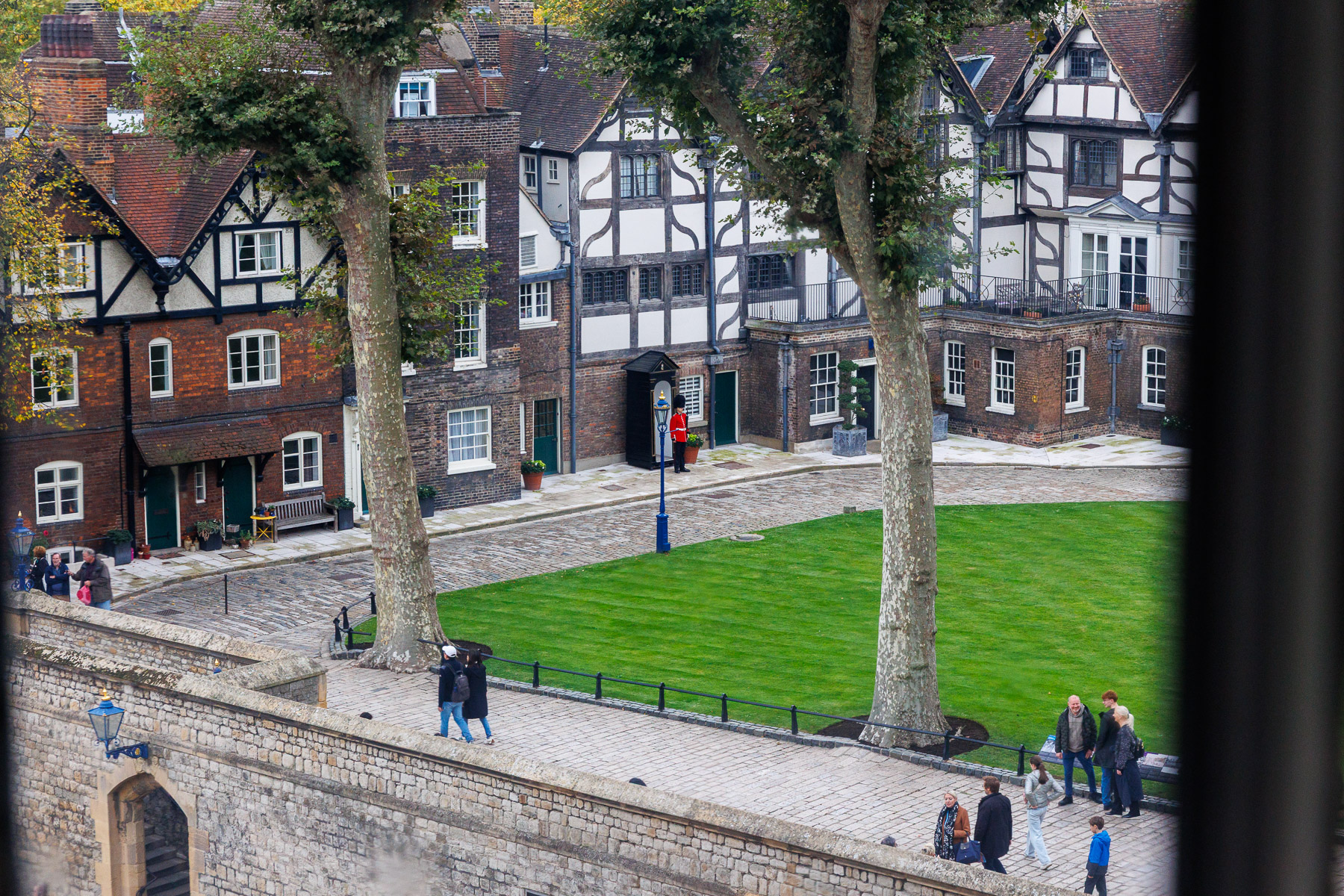
- A view of the current Yeoman Warder’s (AKA Beefeaters) residences from the White Tower.
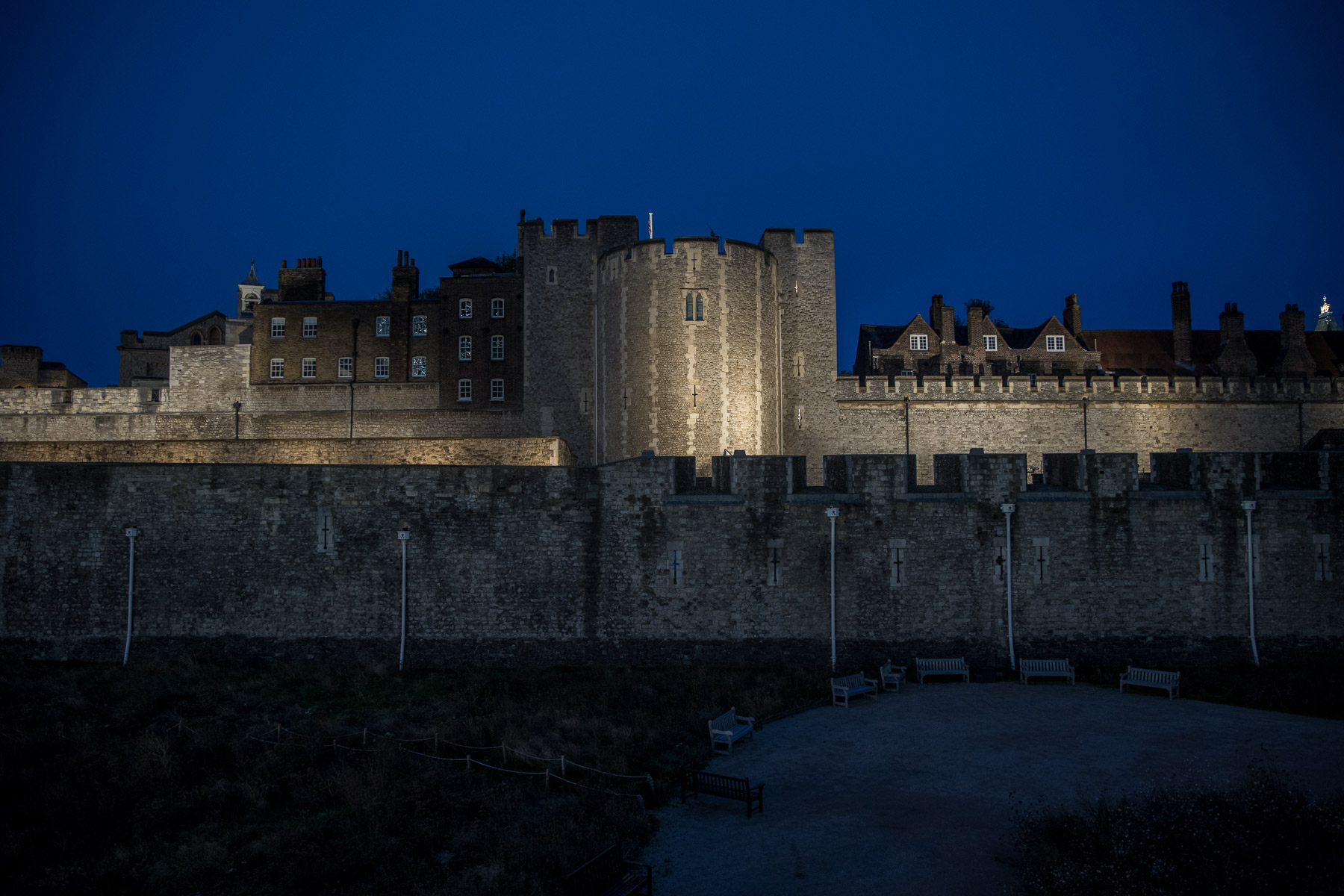
- We arrived at the Tower in early afternoon. By the time we left, it was getting dark.



The British Museum was up next, on Thursday. It's huge, so we picked a couple of the many areas of the museum. There's a lot more to see.
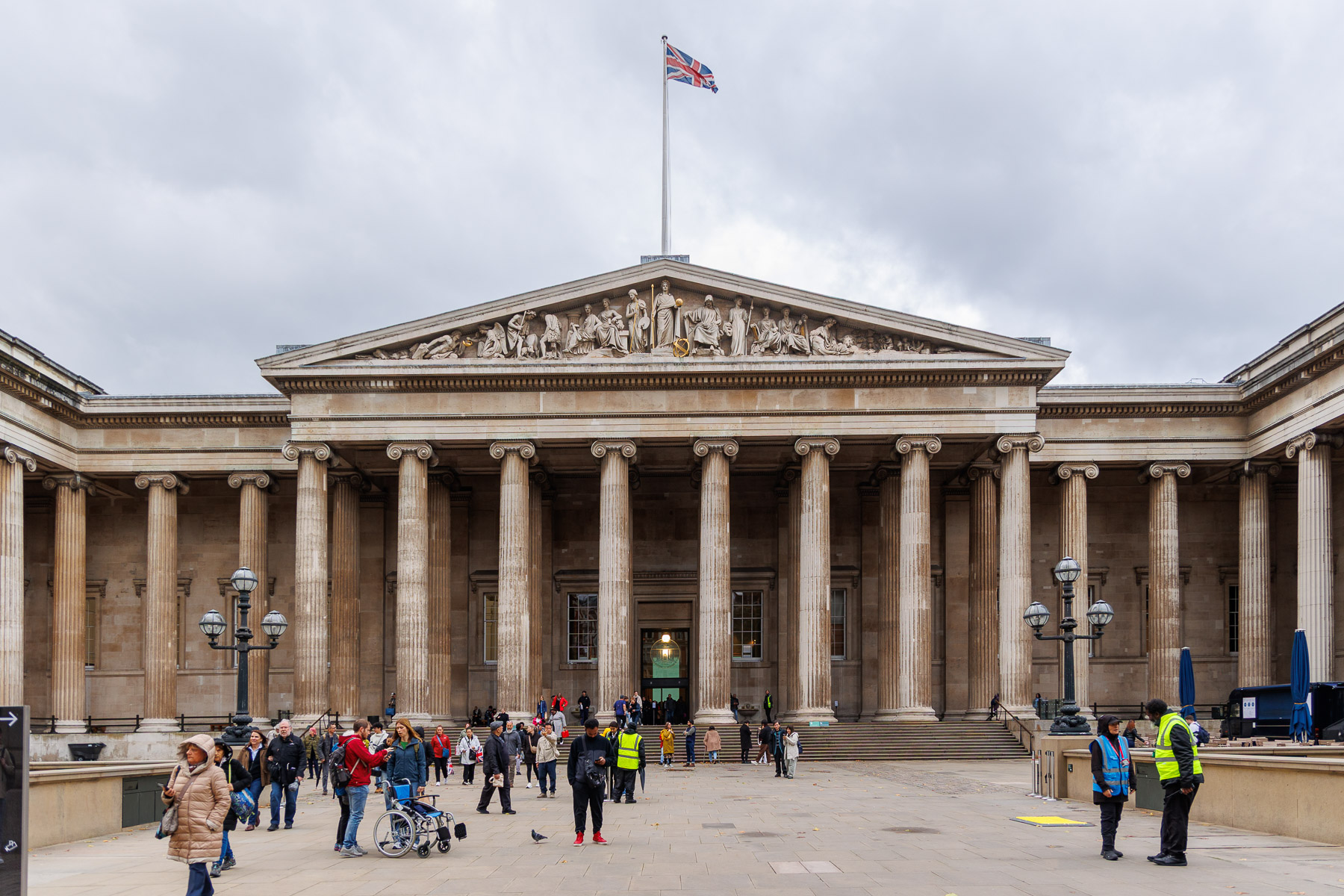
- The entrance to the British Museum.
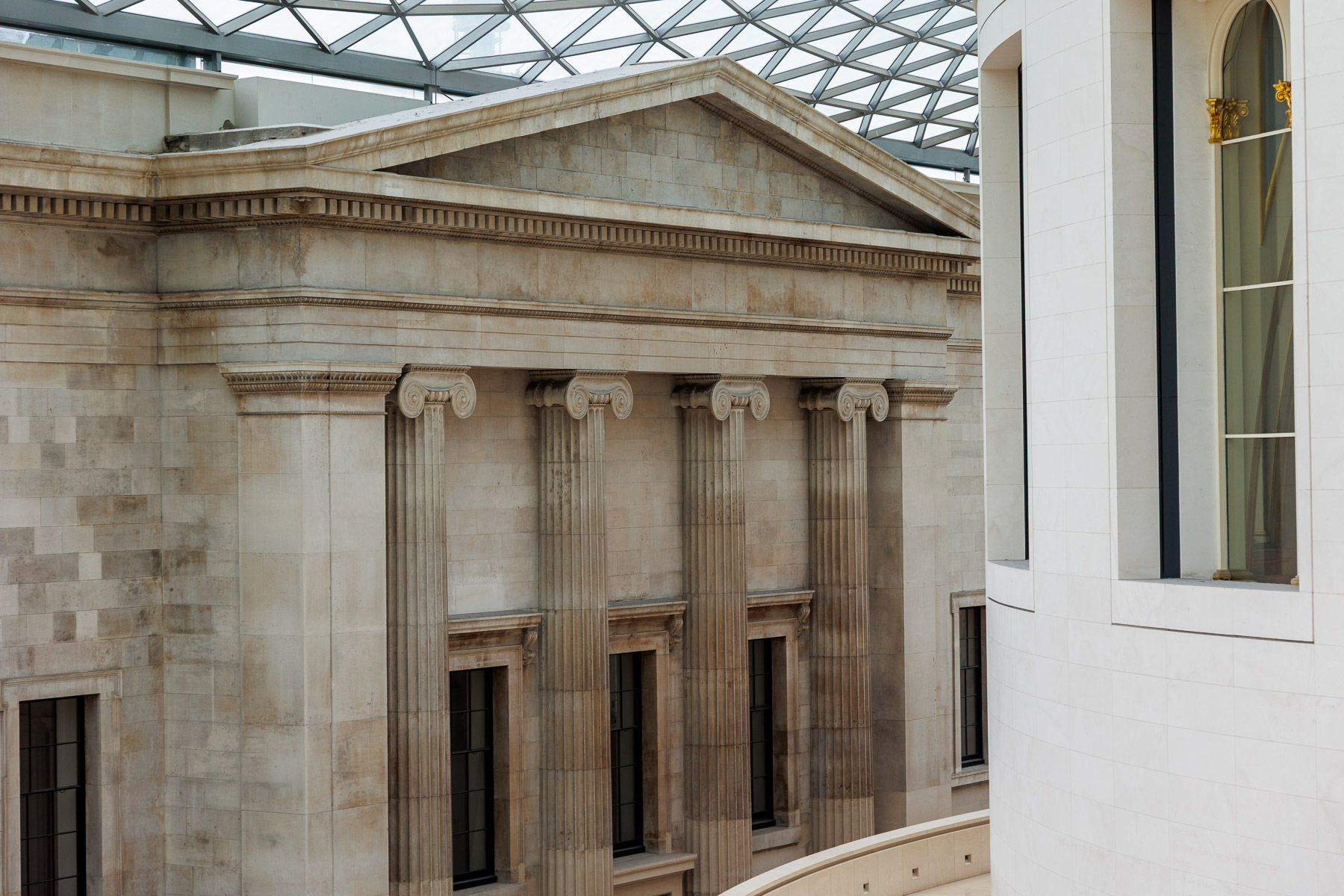
- This is the entrance to the museum halls from the covered courtyard in the middle of the museum.
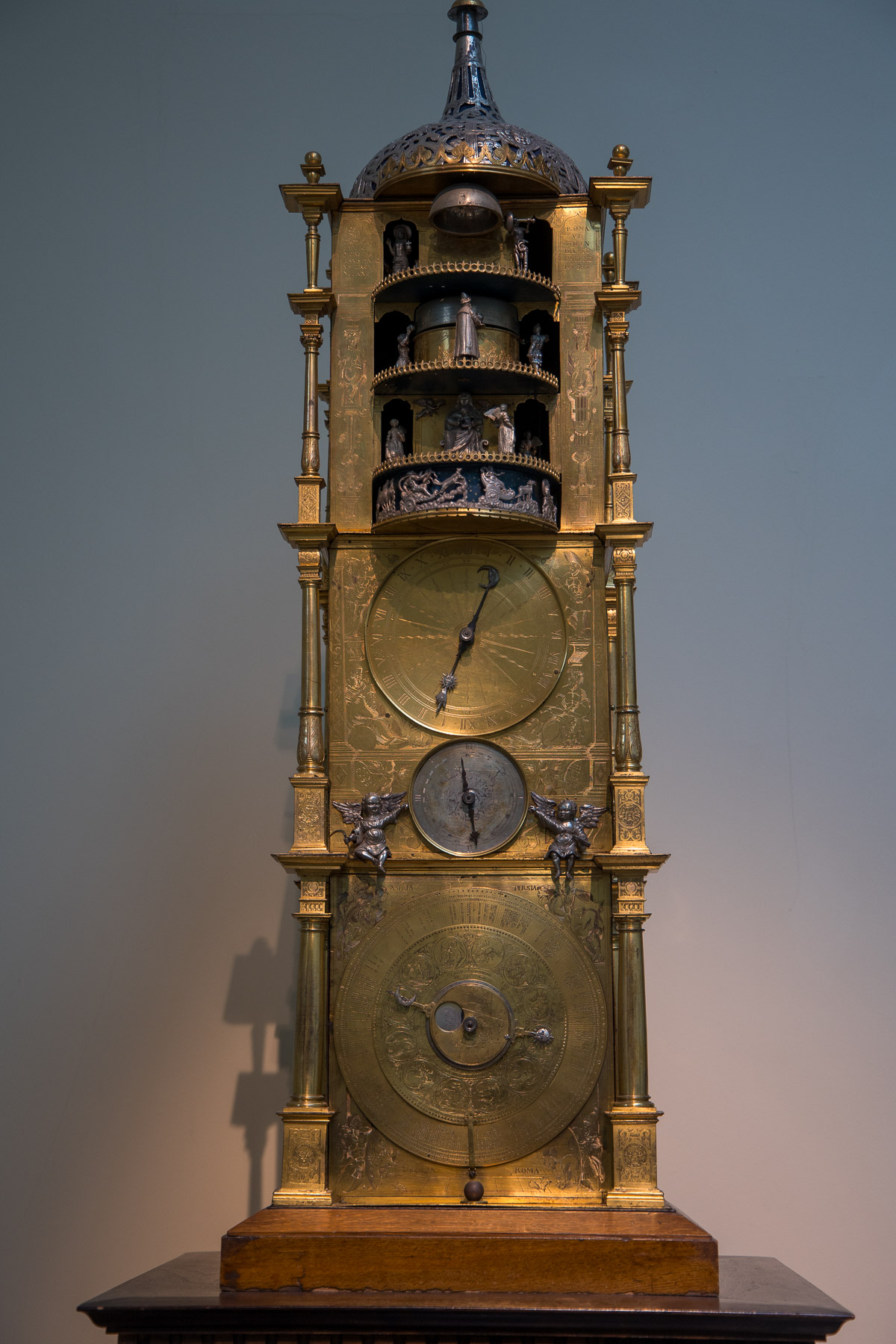
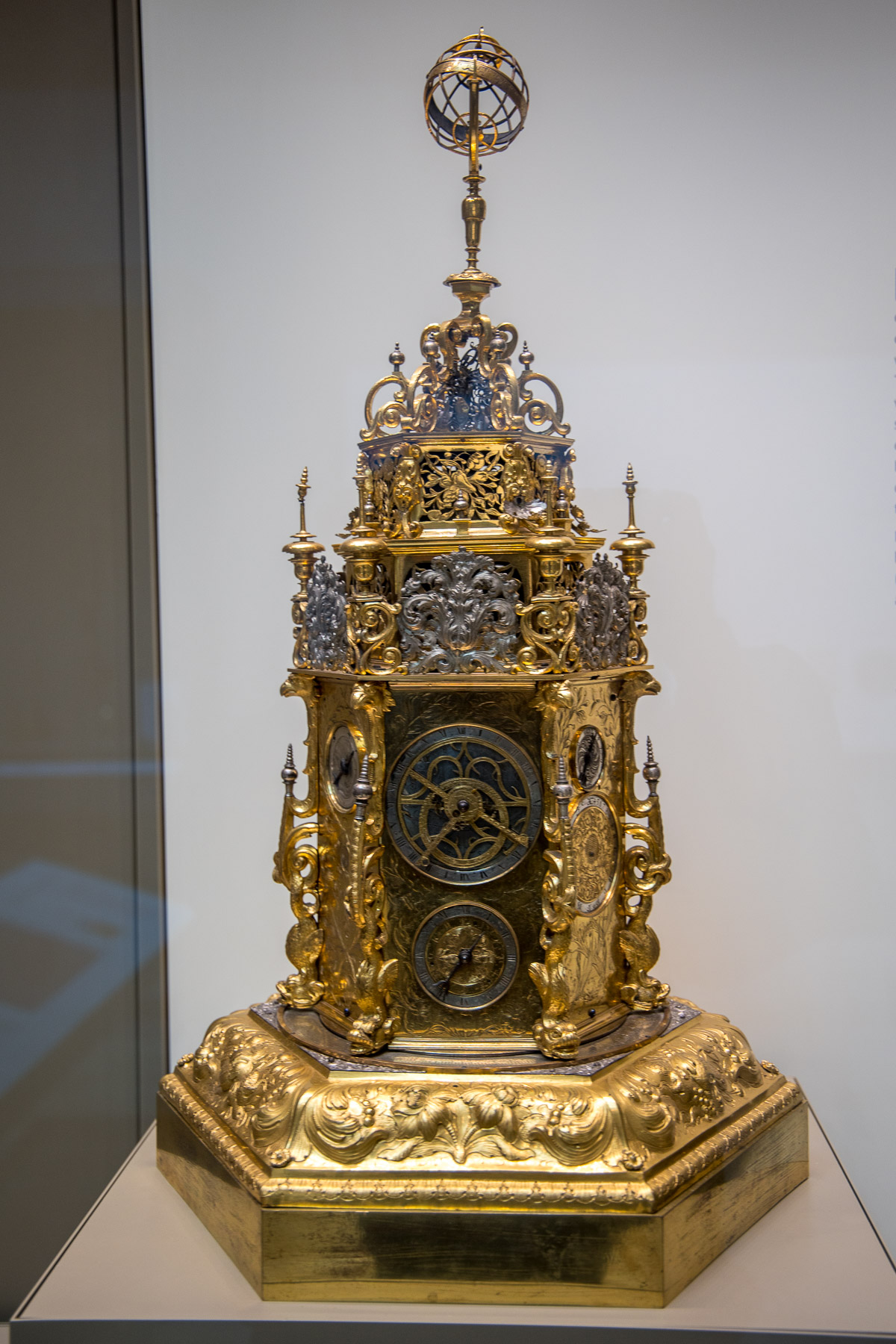
- We decided to start with an exhibit of the history of clocks. This monumental carillon clock, c1589, is based on the cathedral clock in Strasbourg. Every hour it plays music (Our Father), and also strikes the quarter hours. There are three dials on the front. The top is a 24 hour dial. The middle shows the quarter hours and minutes, while the bottom is an annual calendar including the saints’ days and feast days.
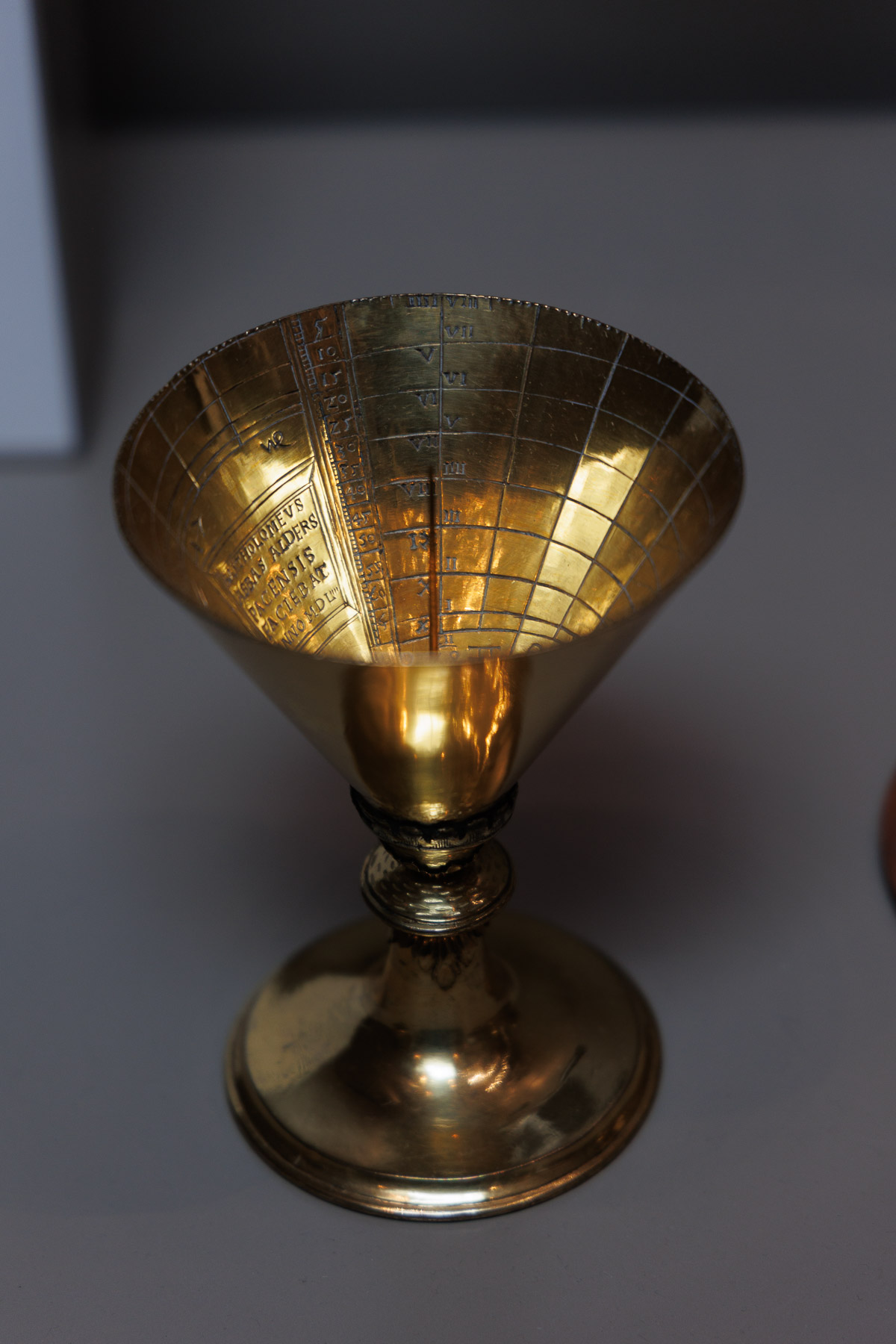
- This sundial, c1554, is built in the form of a chalice. It is based on the sun’s height, but includes a date scale which needs to be aligned to the shadow to get the correct hour.
- This clock, c1650, is typical of those made by clockmakers who wanted to qualify as masters in their guilds. The front includes an astrolabic dial showing the progress of the sun, moon and stars. On the other side are dials showing the times of sunrise and sunset and setting the clock to strike 12 or 24 hours.
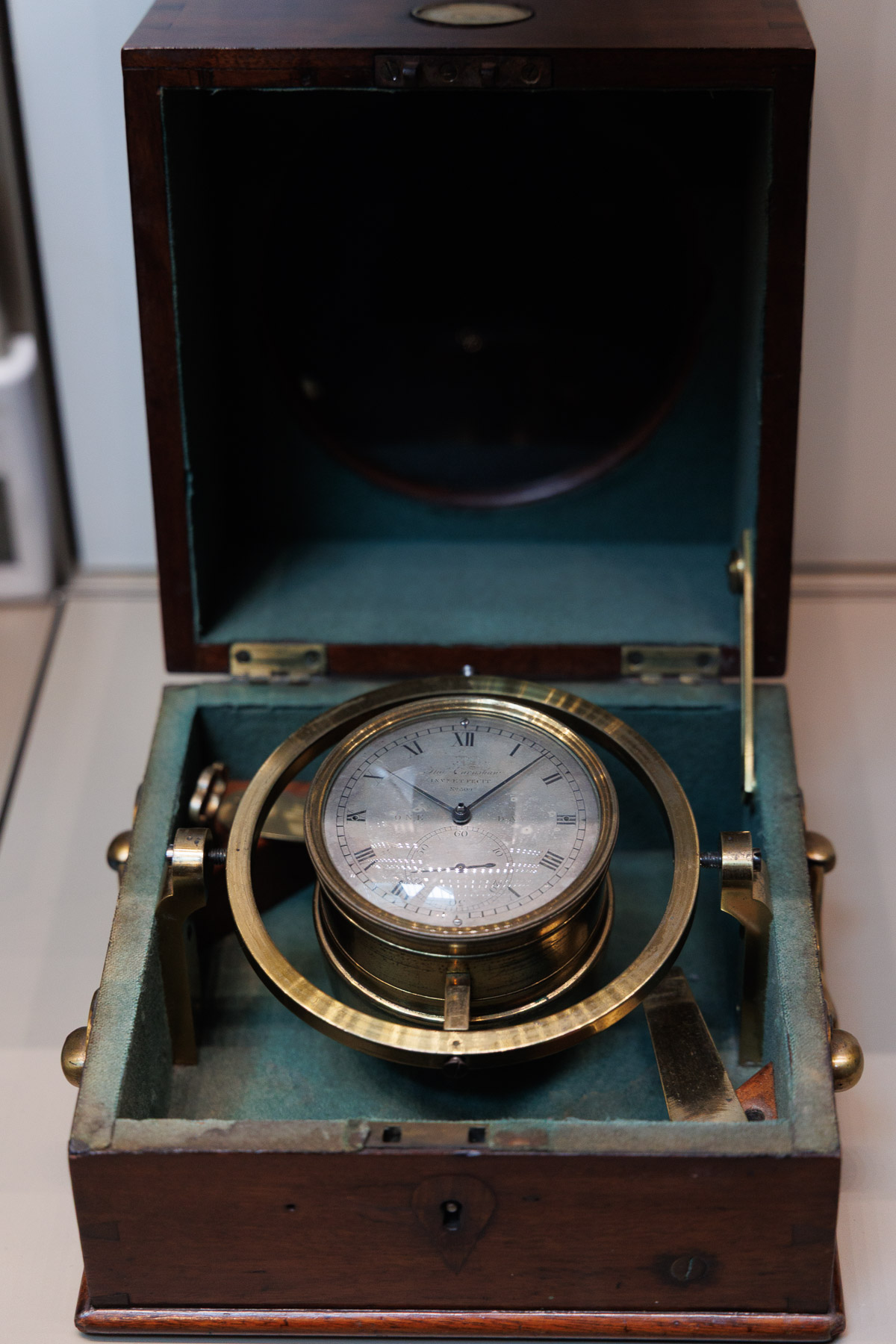
- Timekeeping was very important for marine navigation. Earnshaw’s chronometer was issued to the Beagle for Charles Darwin and Captain Robert Fitzroy’s momentous voyage of discovery to the South Pacific.
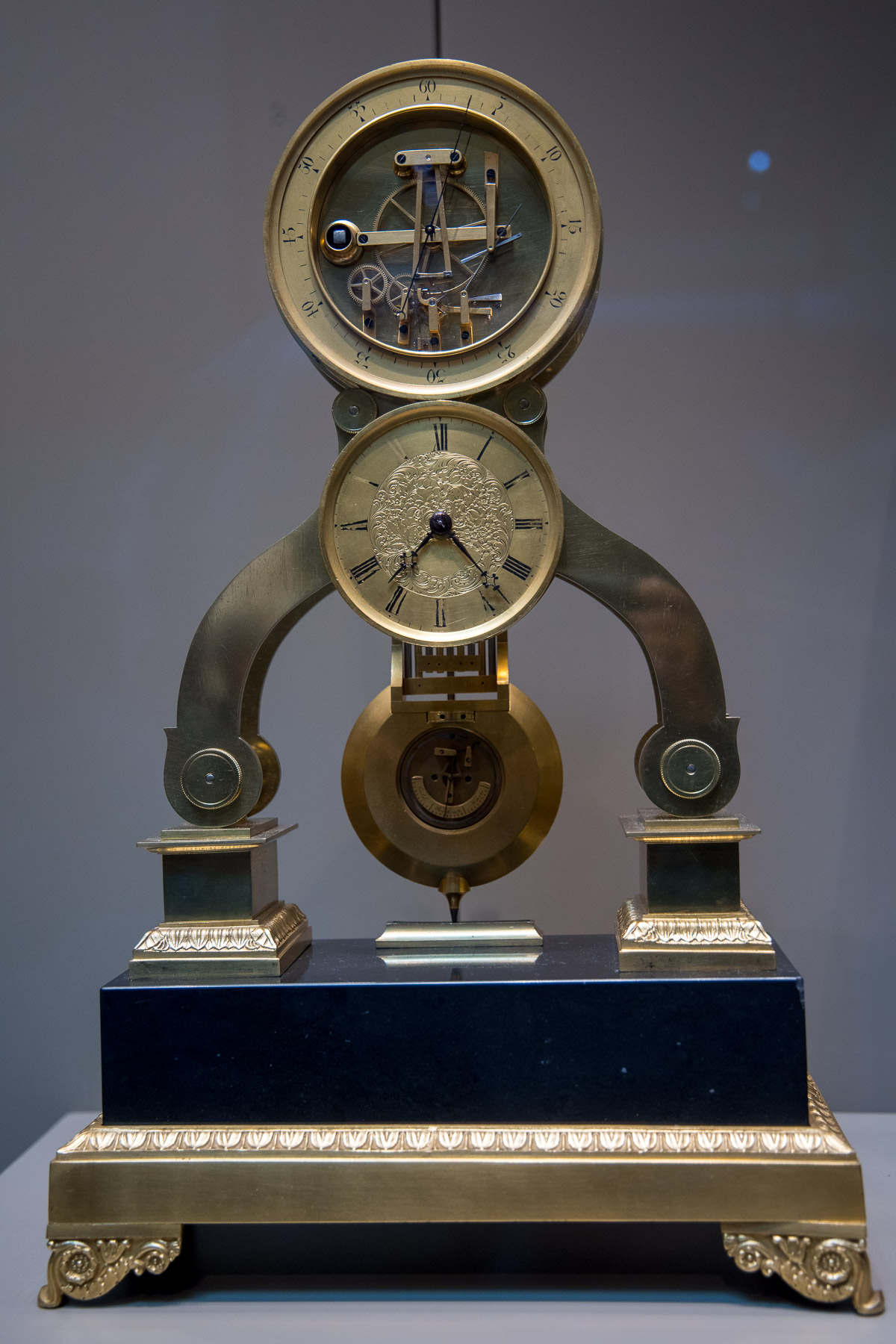
- This clock is an early (c1727) example of of a clock using a gridiron pendulum that used mercury to allow the pendulum to swing at a constant rate regardless of temperature.
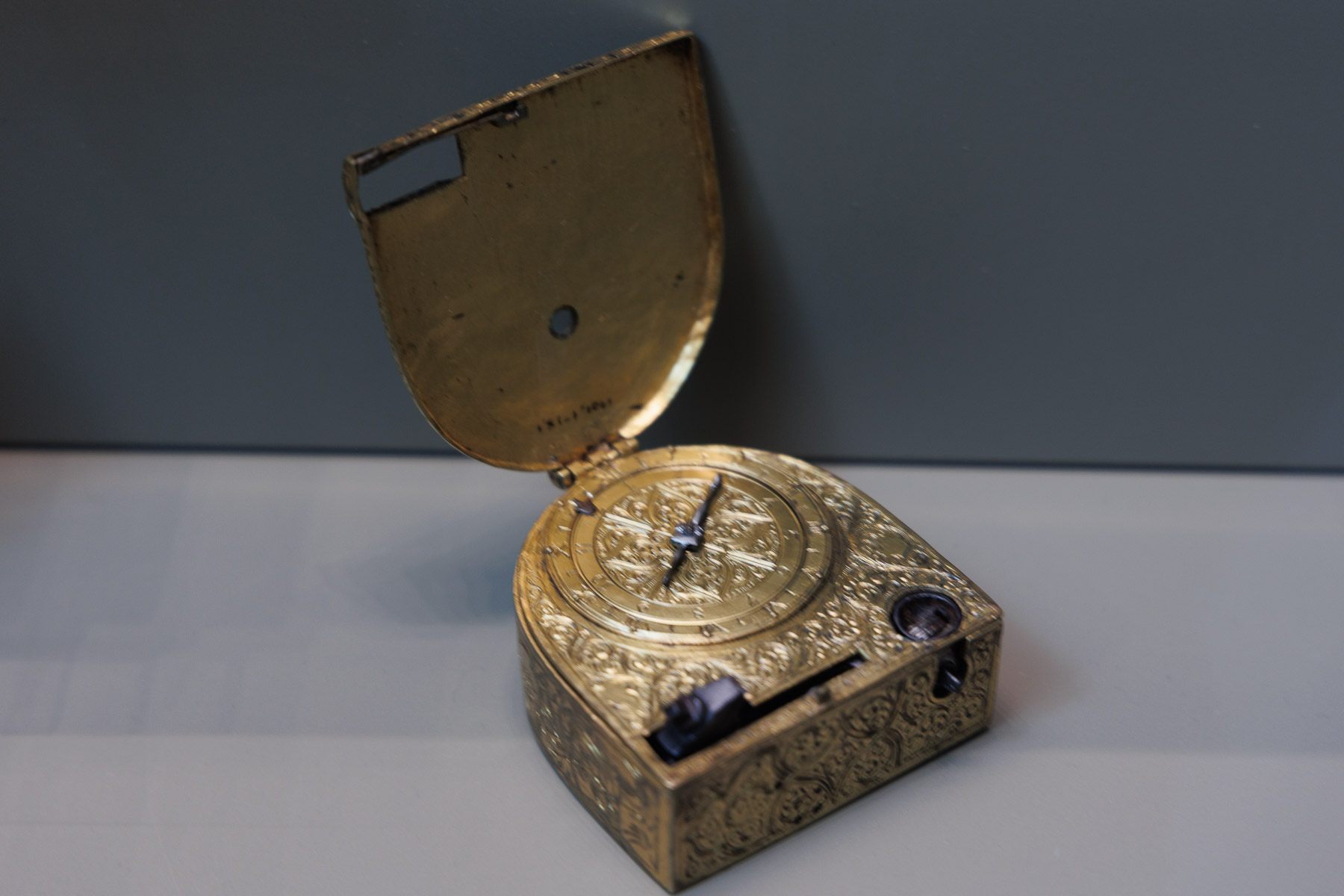
- This alarm clock, c1570, is sure to wake you up with a bang. At the chosen time the alarm would sound with both a bell and a flash of gunpowder. It also lit a wax taper to provide some light to the bedchamber. (Sorry for the blur.)
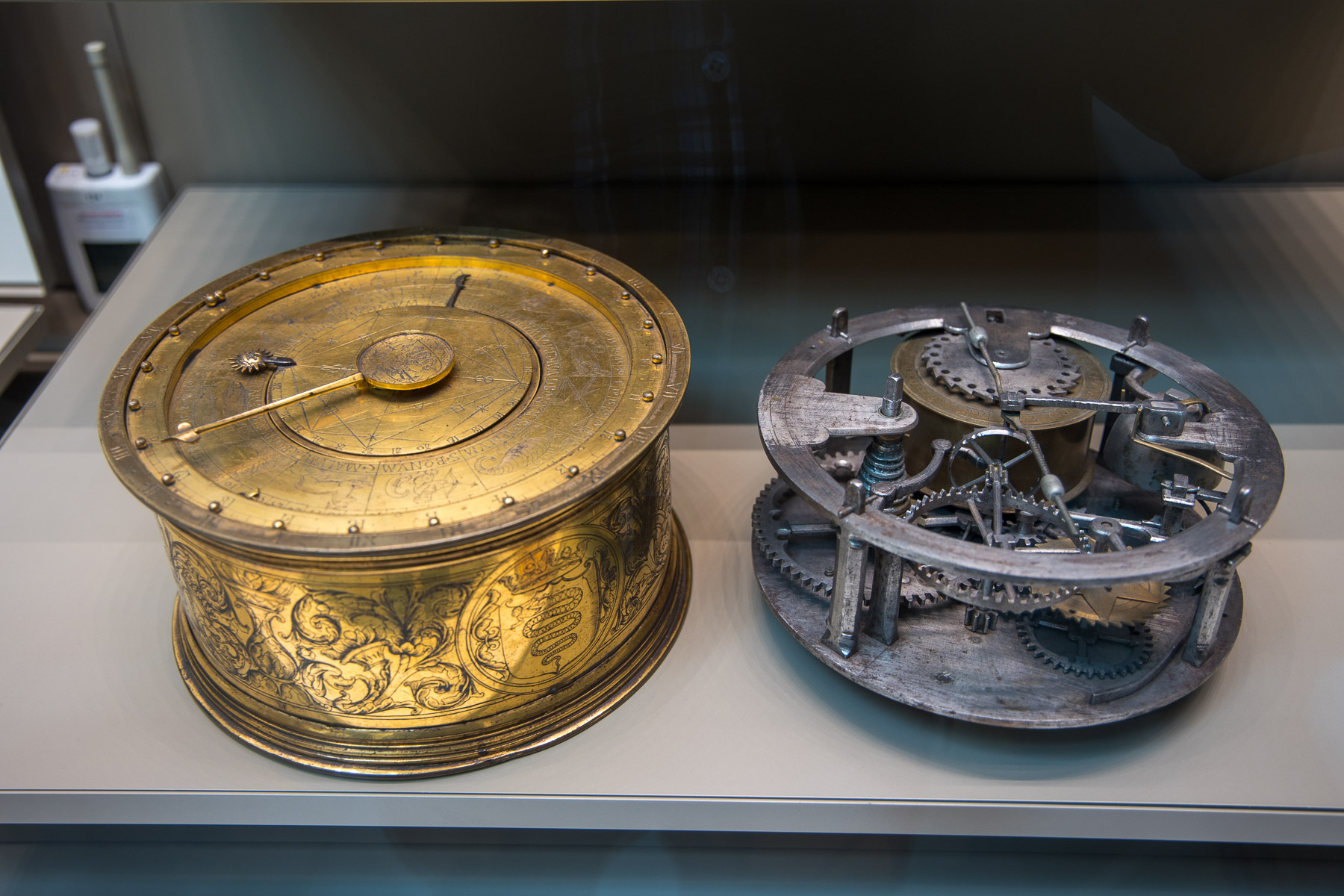
- This is a horizontal table clock, c1525. I thought it was interesting that they took the internal mechanism out so we could see the gears. This clock contains the earliest surviving fusee, a device that evens out the unequal force of the mainspring as it unwinds. (The fusee was invented in the mid 1400s.)
- After the clock exhibit, we visited a gallery with Native American artifacts. These stone sculptures of Huaxtec female deities, c900 – 1450, are from the Gulf Coast of Mexico.
- In 1818, John Ross sailed between Greenland and Canada looking for the Northwest Passage. He returned with a collection of Inuit items, including this lance head. The Inuits had little wood to use for tools, but a shower of meteorites provided metal which could be hammered to make knives, harpoons, and this lance head with a narwhal ivory shaft.


On Friday, Ellen and I visited the Royal Mews (next to Buckingham Palace), where the royal carriages are stored and the horses live and train.
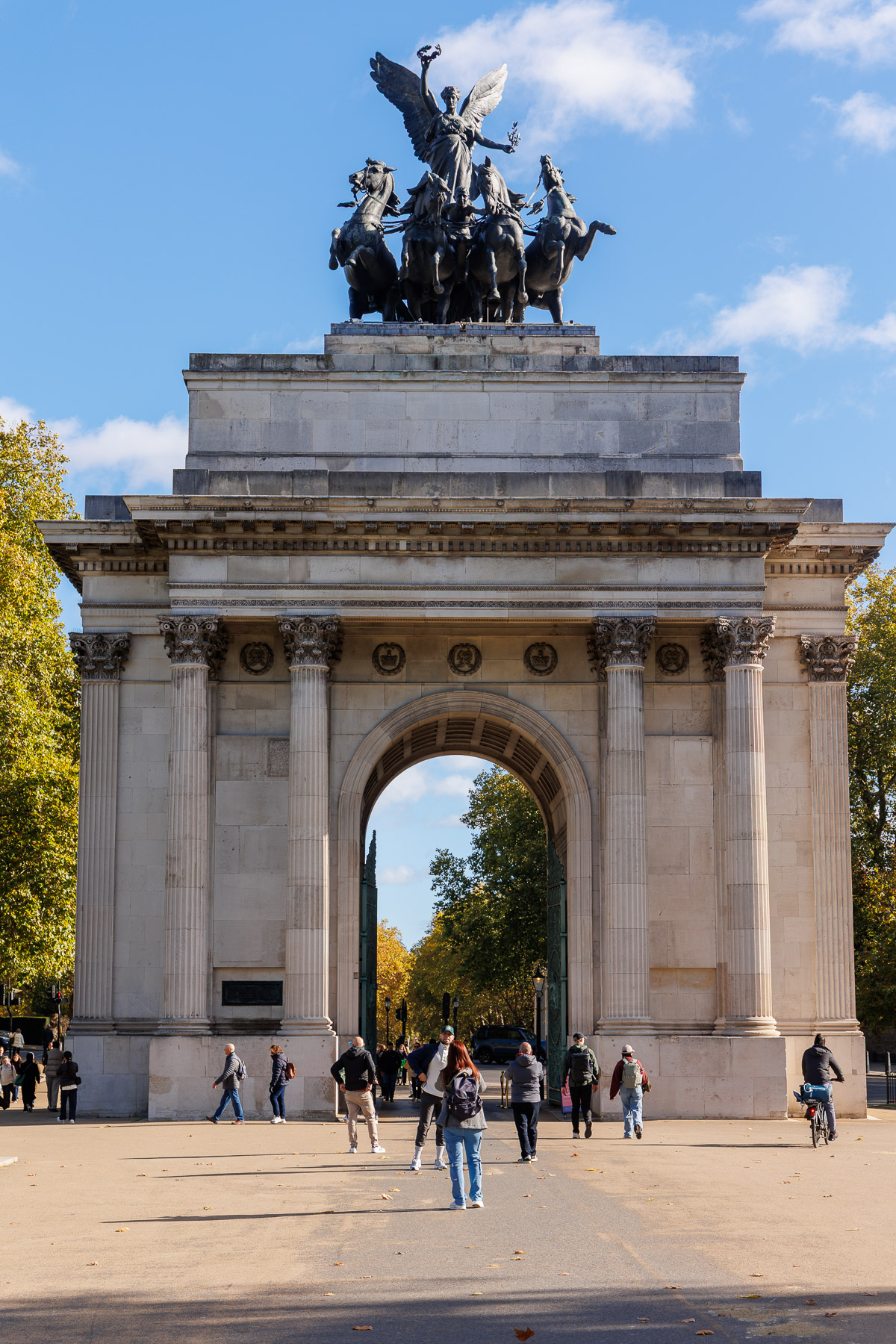
- We took the underground to the Hyde Park Corner station, which exits next to the Wellington Arch. It's a short walk from there to Buckingham Palace and the Royal Mews.
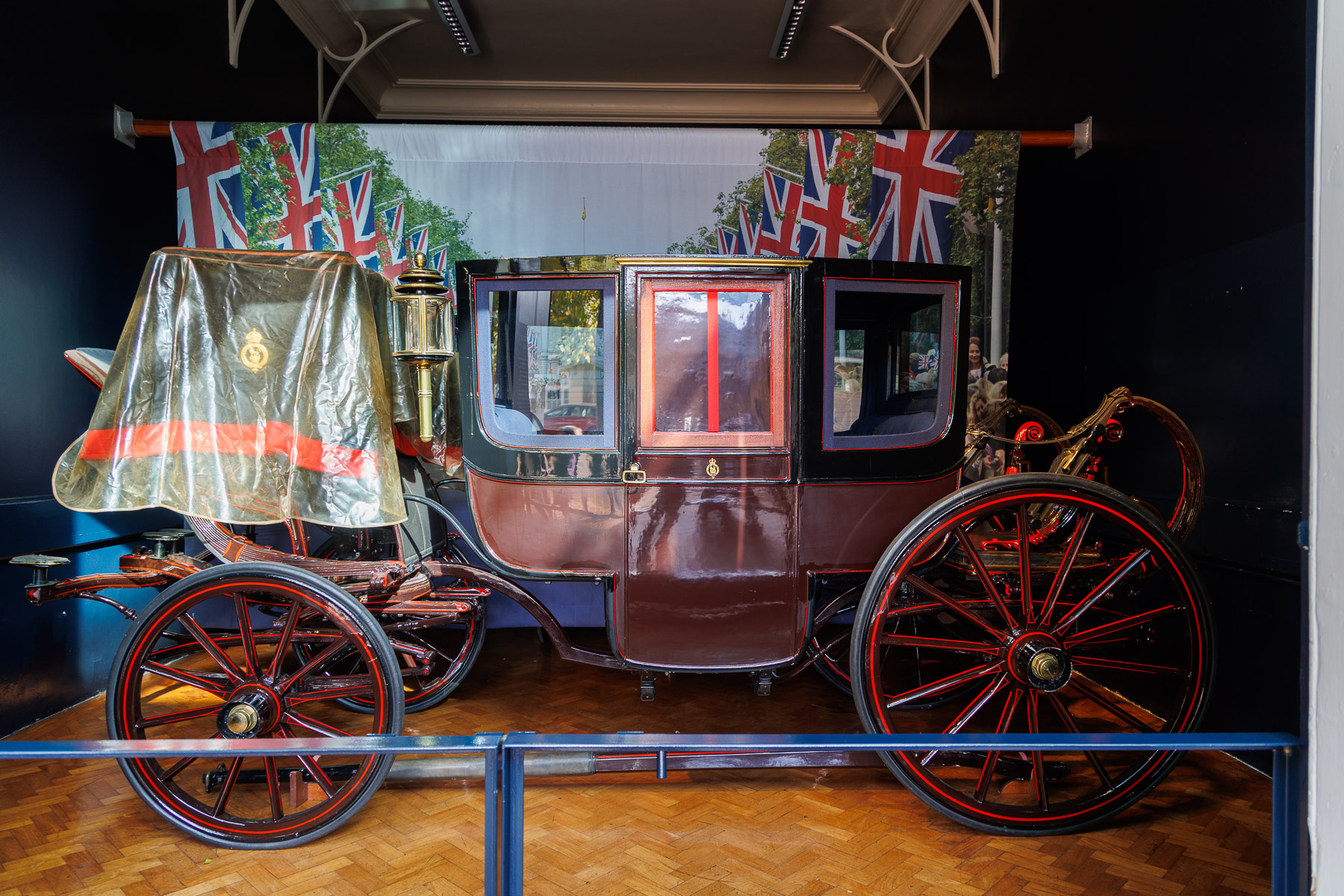
- King Edward VII Town Coach. This was used for distinguished visitors rather than the royal travelers.
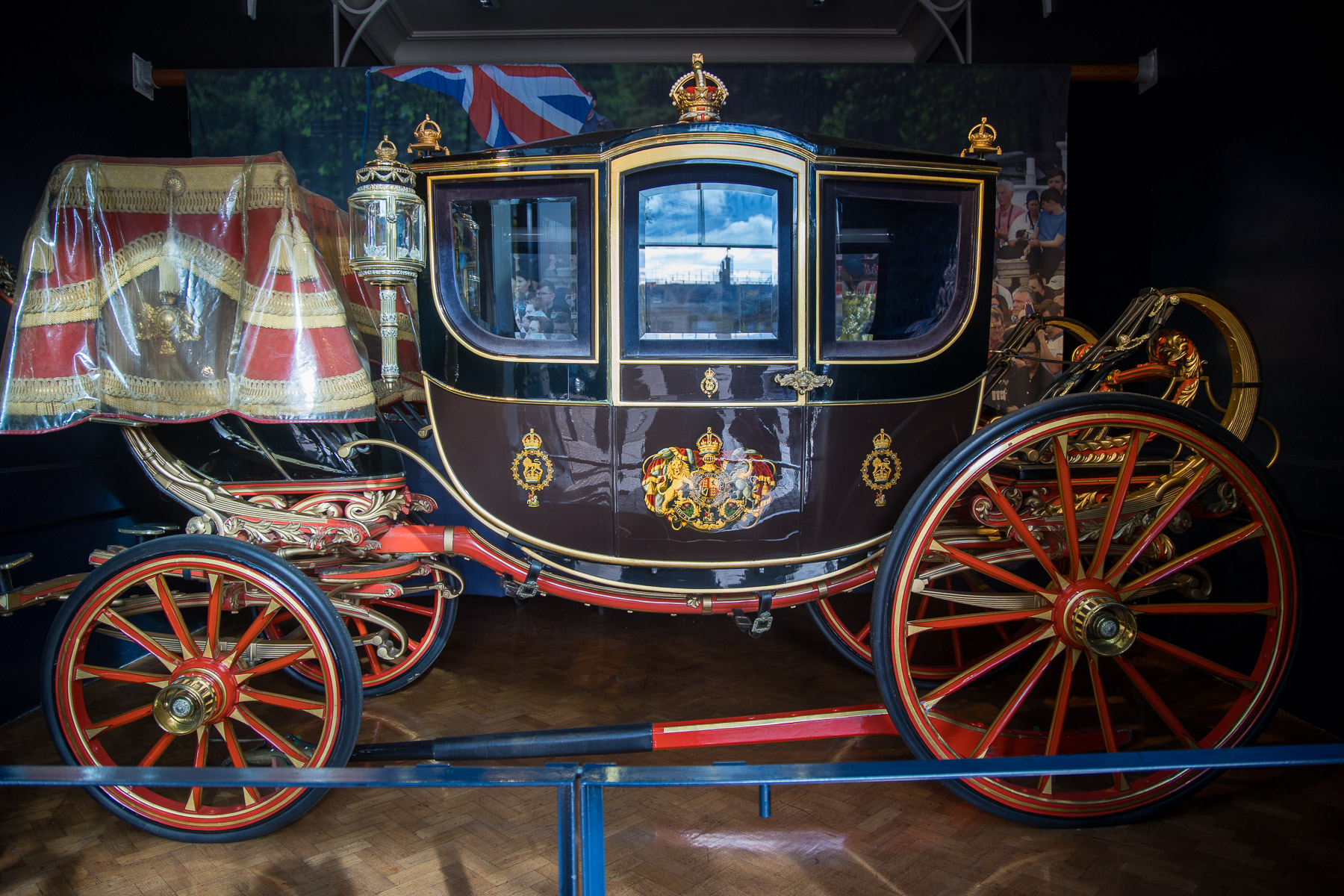
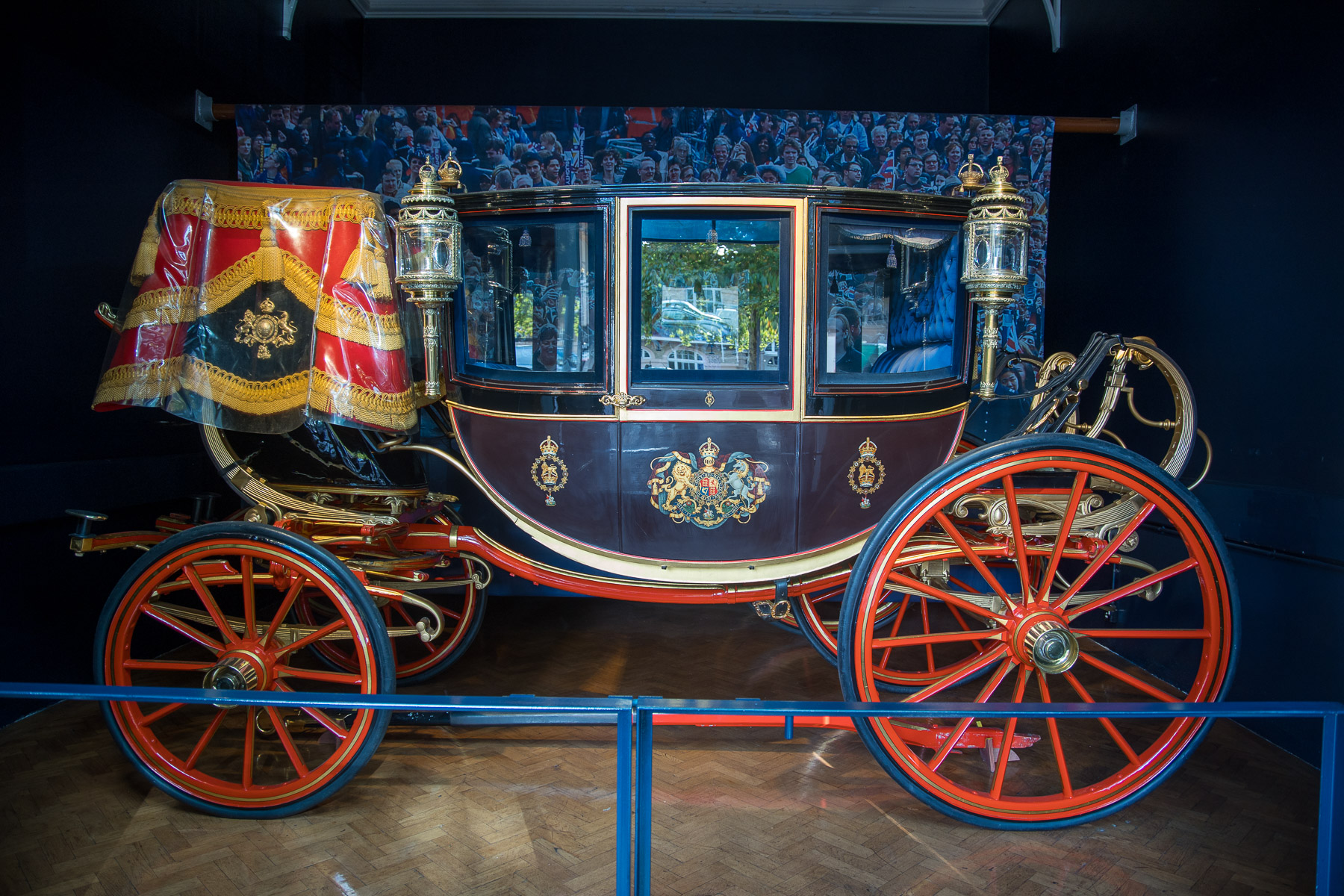
- This coach, built in 1865, was converted to a glass coach in 1893 for the Princess of Wales, later Queen Alexandra. She used it for social events until her death in 1925. Since 1962, this coach has carried the Imperial State Crown, the Sword of State and Cap of Maintenance in its own procession, which travels before the King’s carriage during the State Opening of Parliament.
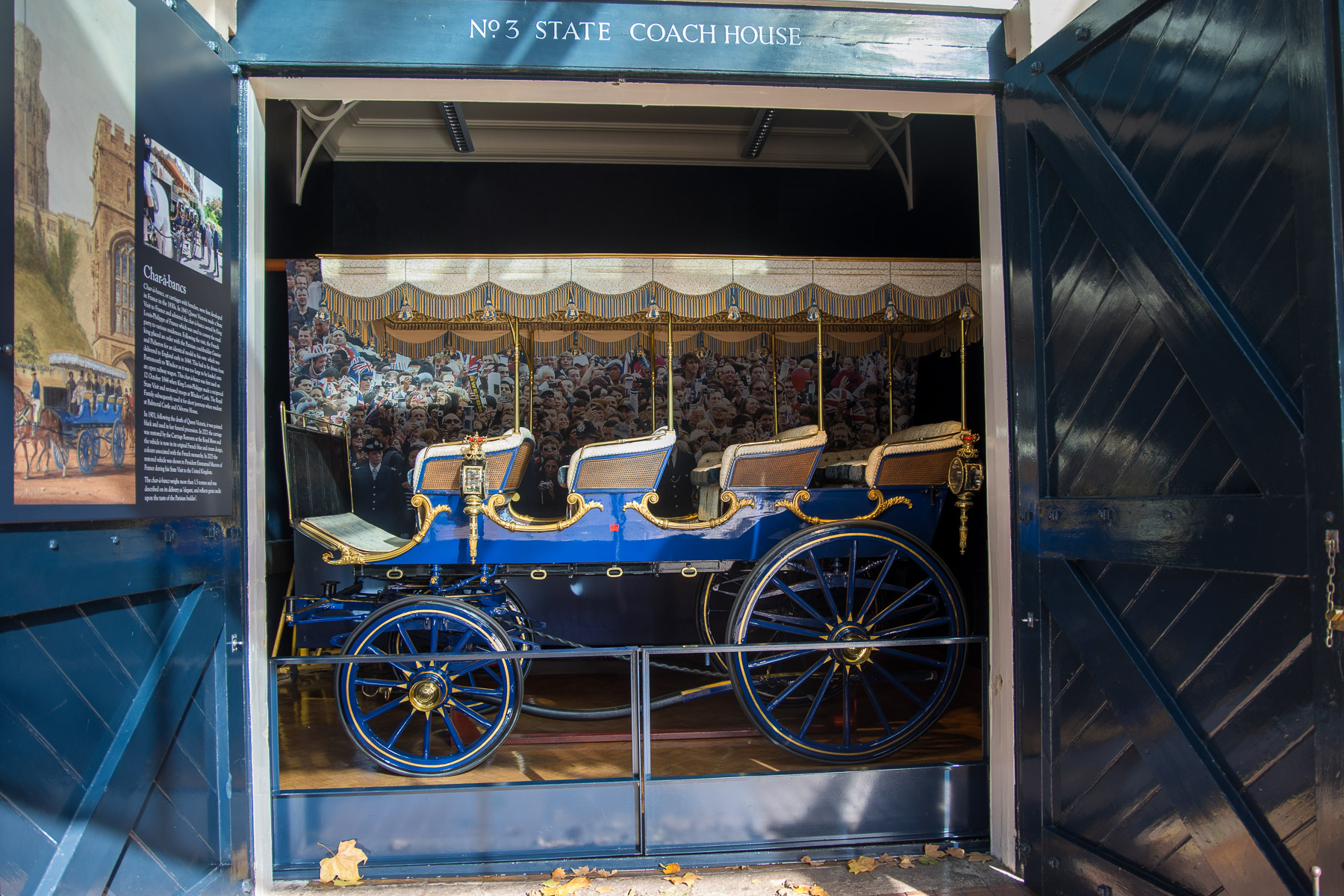
- Queen Victoria admired the French Char-a-bancs on a visit to France in 1843. Thus, King Louis-Philippe (France) sent one as a gift in early 1844. It was painted black in 1901 and used in Queen Victoria’s funeral procession. It was restored to its original blue in 2021.
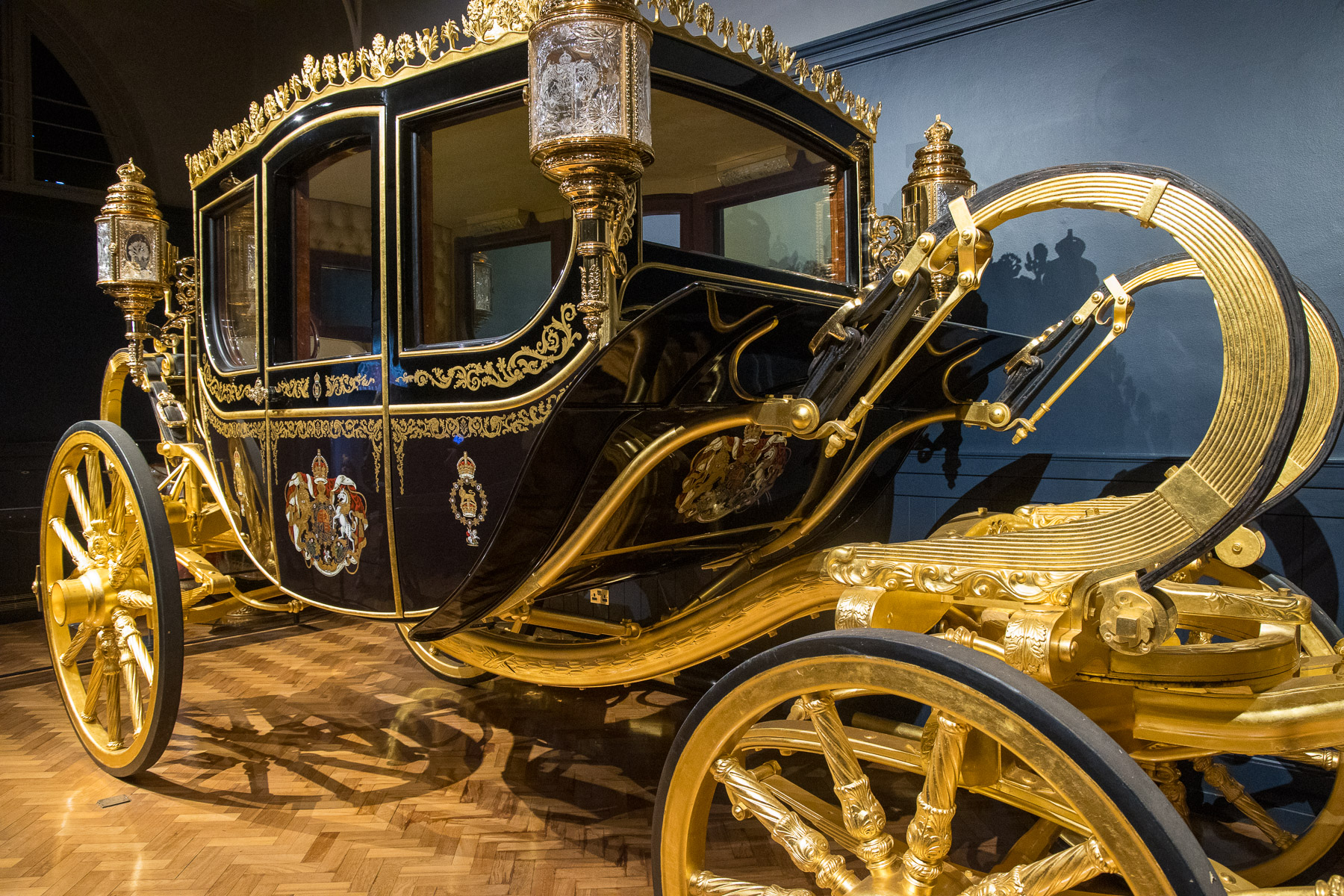
- The Diamond Jubilee State Coach is the newest coach in the Royal Mews. It was created for Queen Elizabeth to commemorate her Diamond Jubilee.
- The Glass Coach. This coach carried Lady Elizabeth Bowes Lyon, later Queen Elizabeth the Queen Mother, to Westminster Abbey for her wedding to the Duke of York, later King George VI. 24 years later, this coach carried their daughter, the future Queen Elizabeth II, to her wedding.
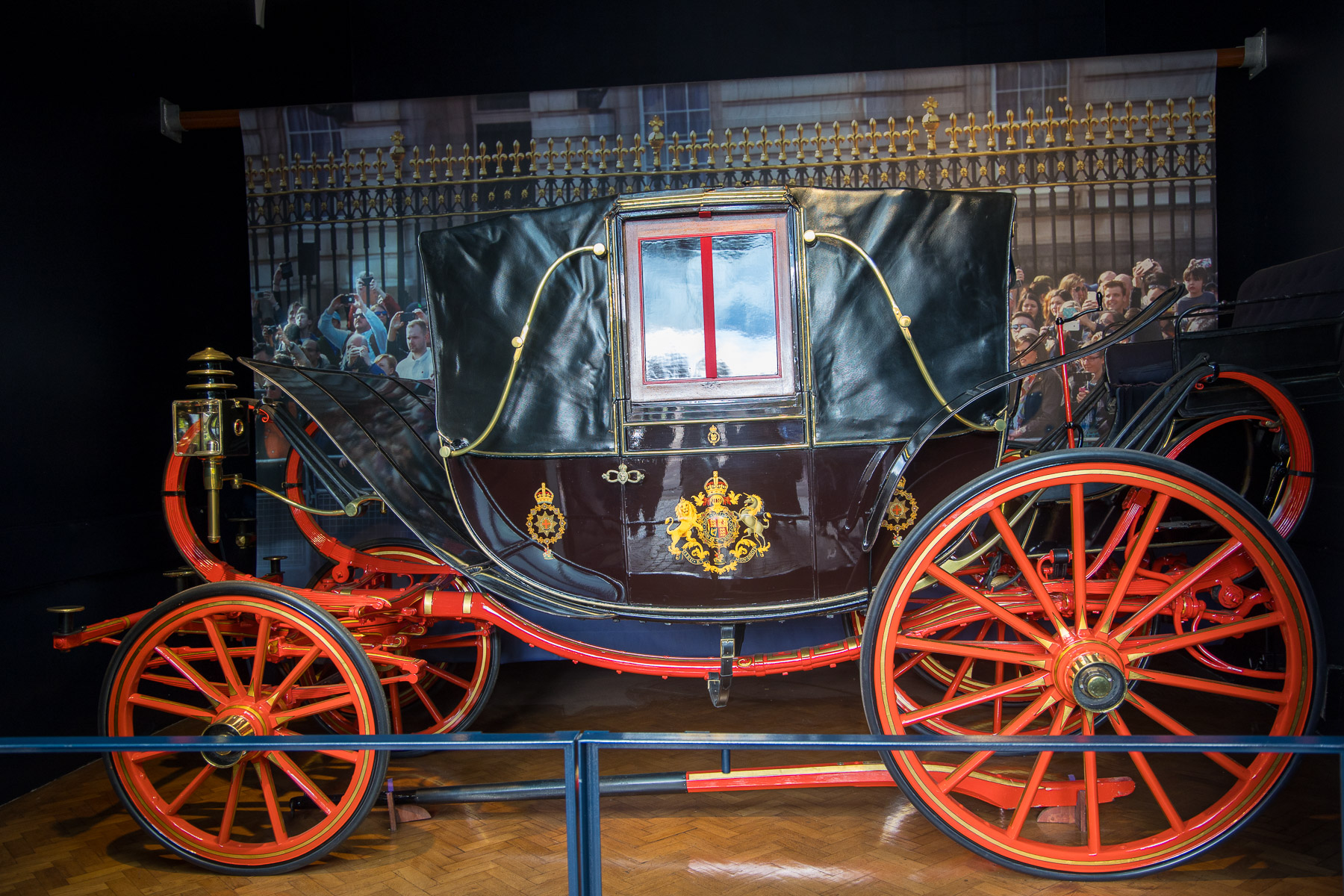
- This Semi-State Landau was one of the favorites of Queen Victoria, since it could be used in both town and country with the hoods open or closed. Queen Victoria noted in her journal of traveling in an open landau from Victoria Station to Buckingham Palace after it had snowed all night. These landaus were also used in the 1897 Diamond Jubilee procession, one of which was used to transport the Queen.
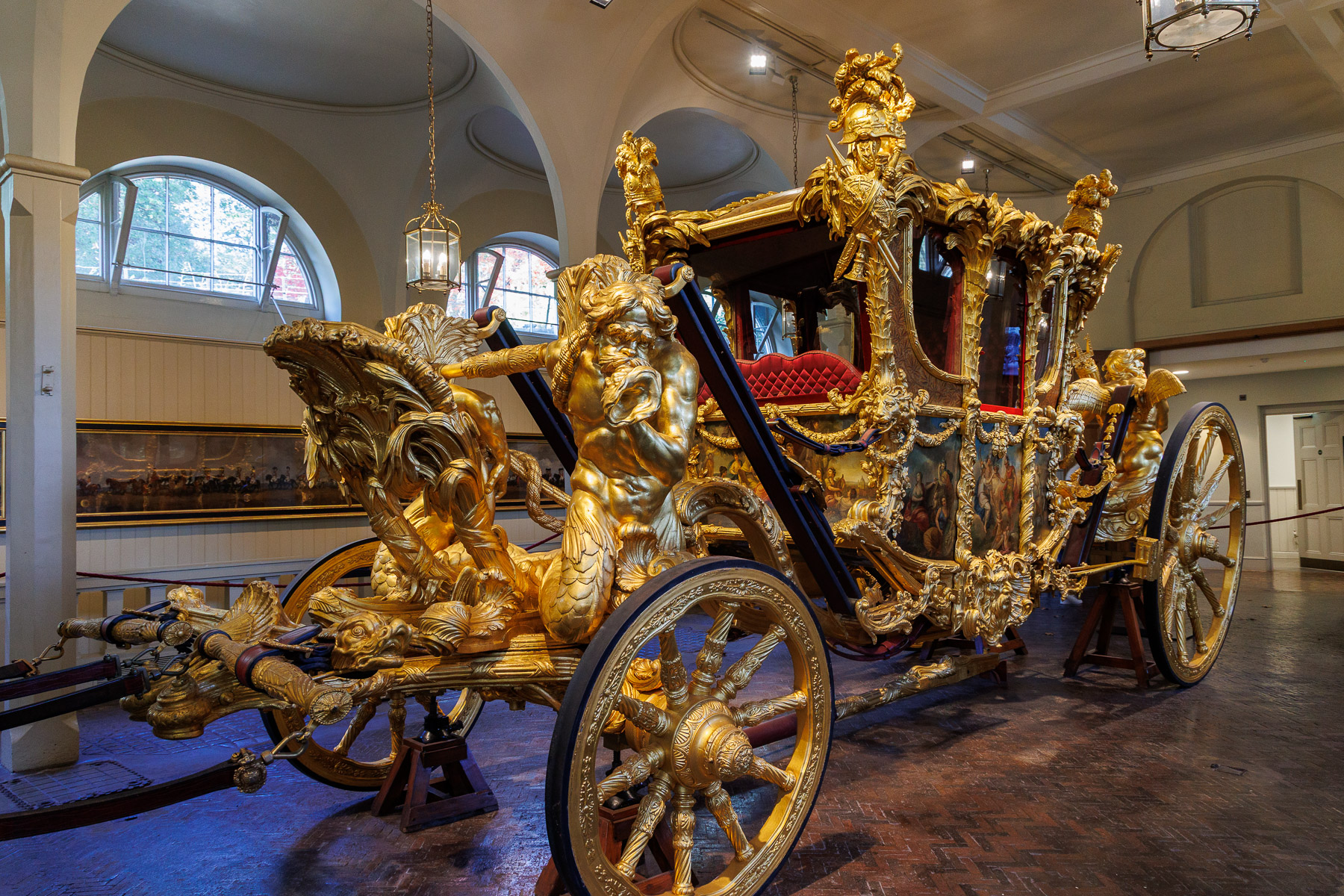
- The Gold State Coach was commissioned by George III in 1760, and delivered to the Royal Mews in November 24, 1792. King George used it the next day as he traveled to the State Opening of Parliament. This coach is still used for official processions.
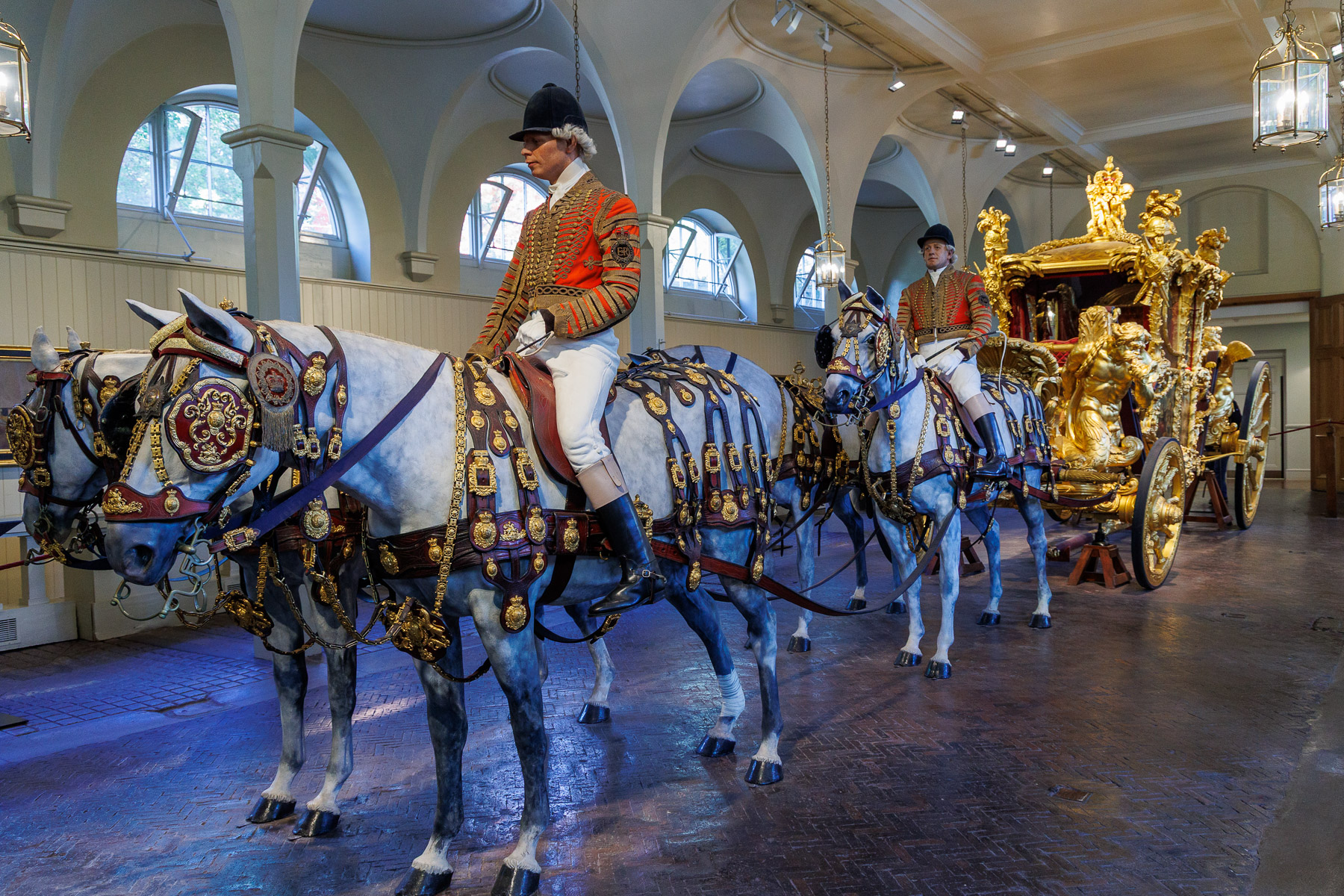
- A view of the Gold State Coach with model horses and riders, created by Madame Tussaud’s museum for this display.
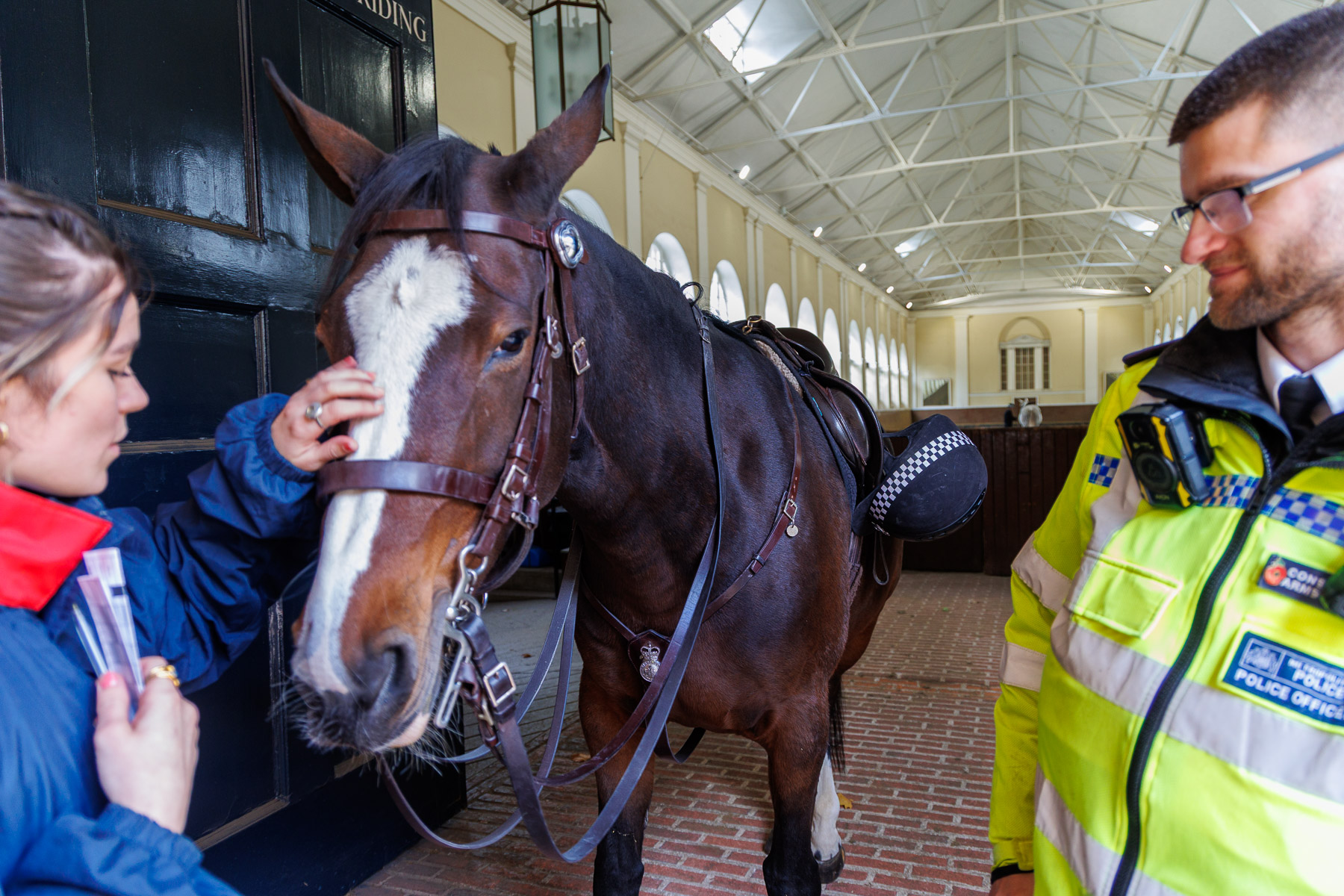
- As we were leaving, we had a chance to meet (and pet) Duchess, one of the horses in training to lead the carriages in future events.
On Saturday, our last day in London, Ellen and I had some time before our flight home. We took a tour inside Buckingham Palace. Photos inside the palace aren't permitted, so I only have a few photos to share. After the tour, we had to head to the airport. The trip was great, but it's good to be home.
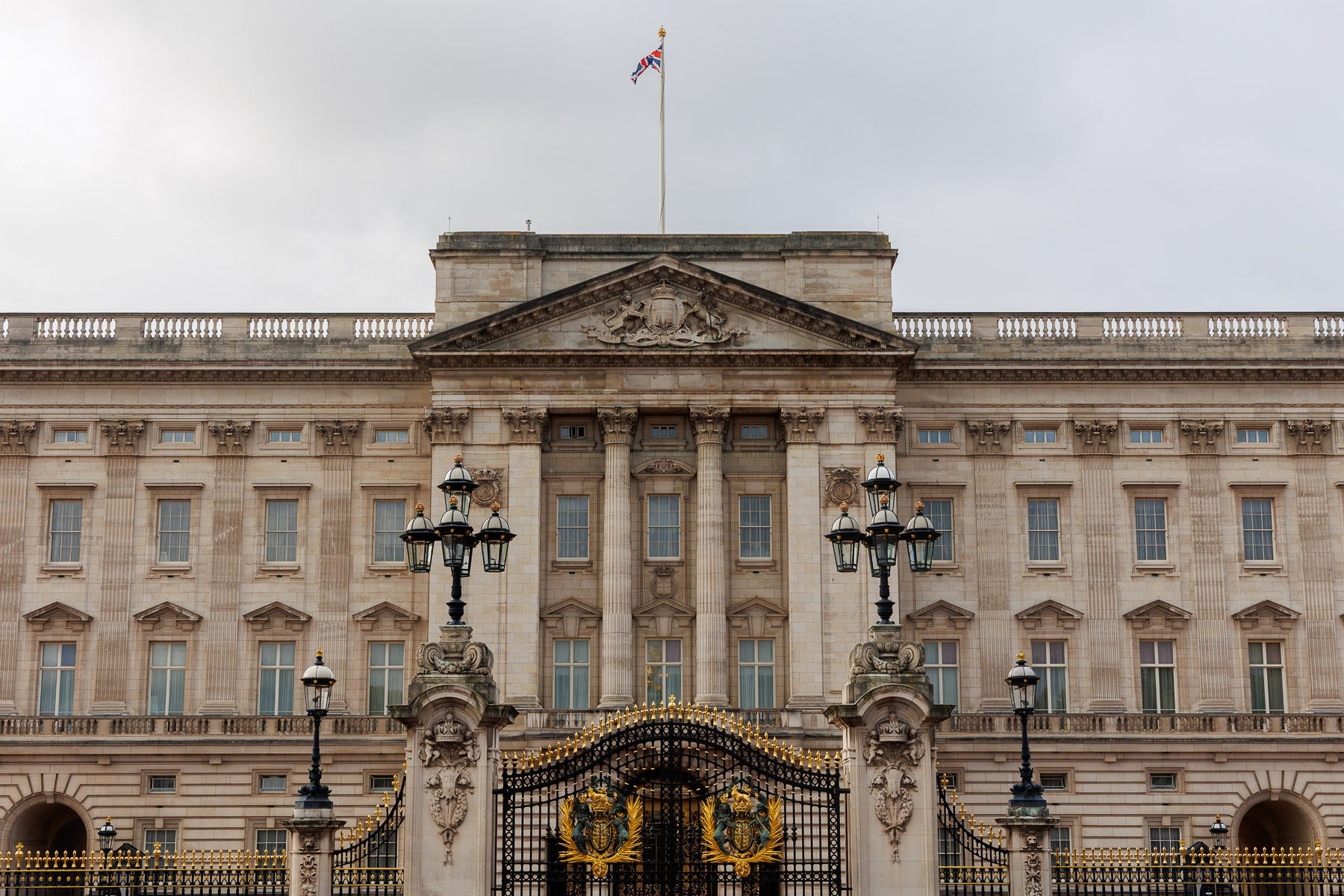
- Buckingham Palace. This is the East Wing. We toured this part of the palace, but photos are not permitted inside. The window right above the gate is where Queen Elizabeth stood for her Diamond Jubilee broadcast, since looking out that window was a view of the statue of Queen Victoria, who also celebrated her Diamond Jubilee. We were in that room during the tour. Great view.
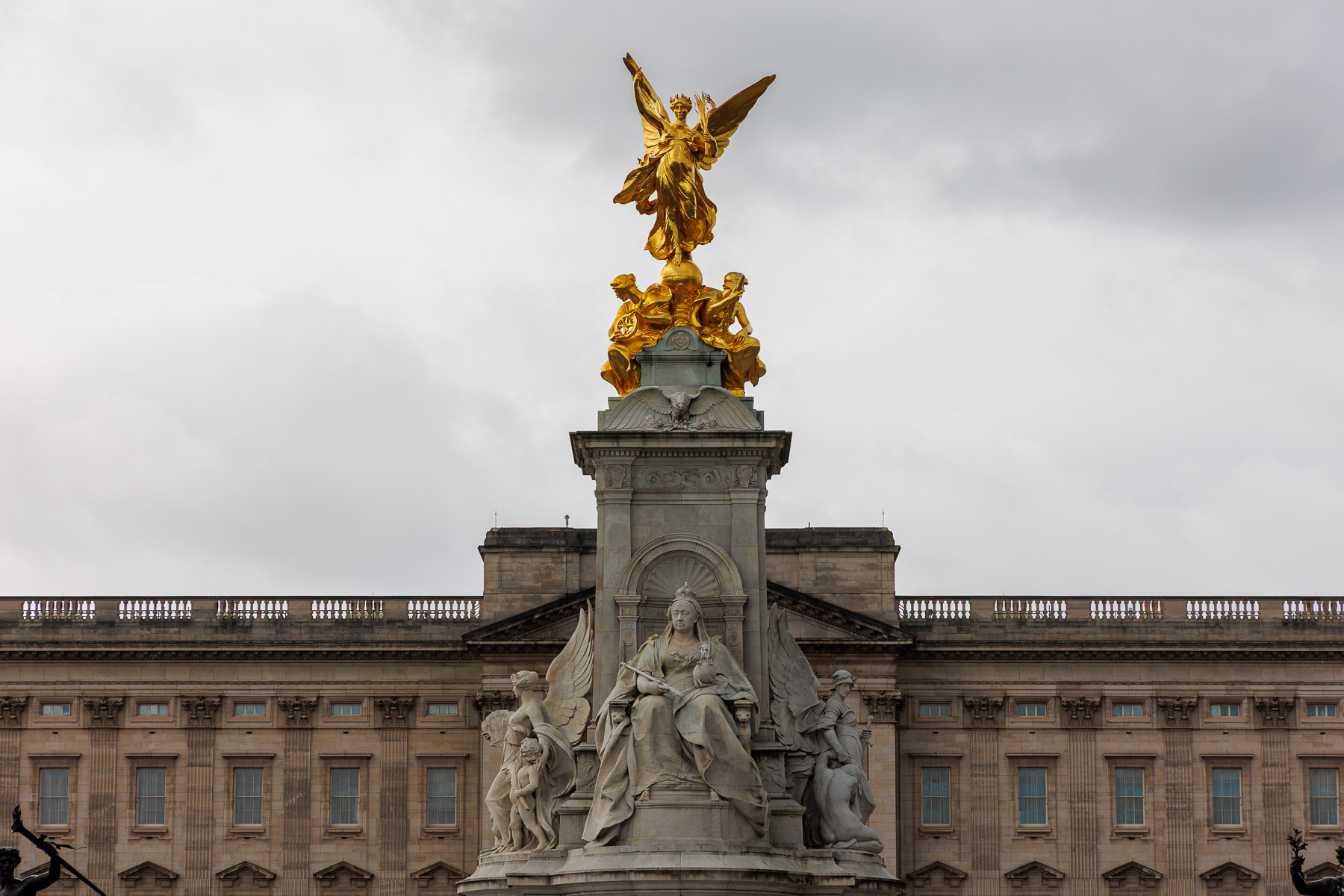
- The statue of Queen Victoria outside Buckingham Palace.
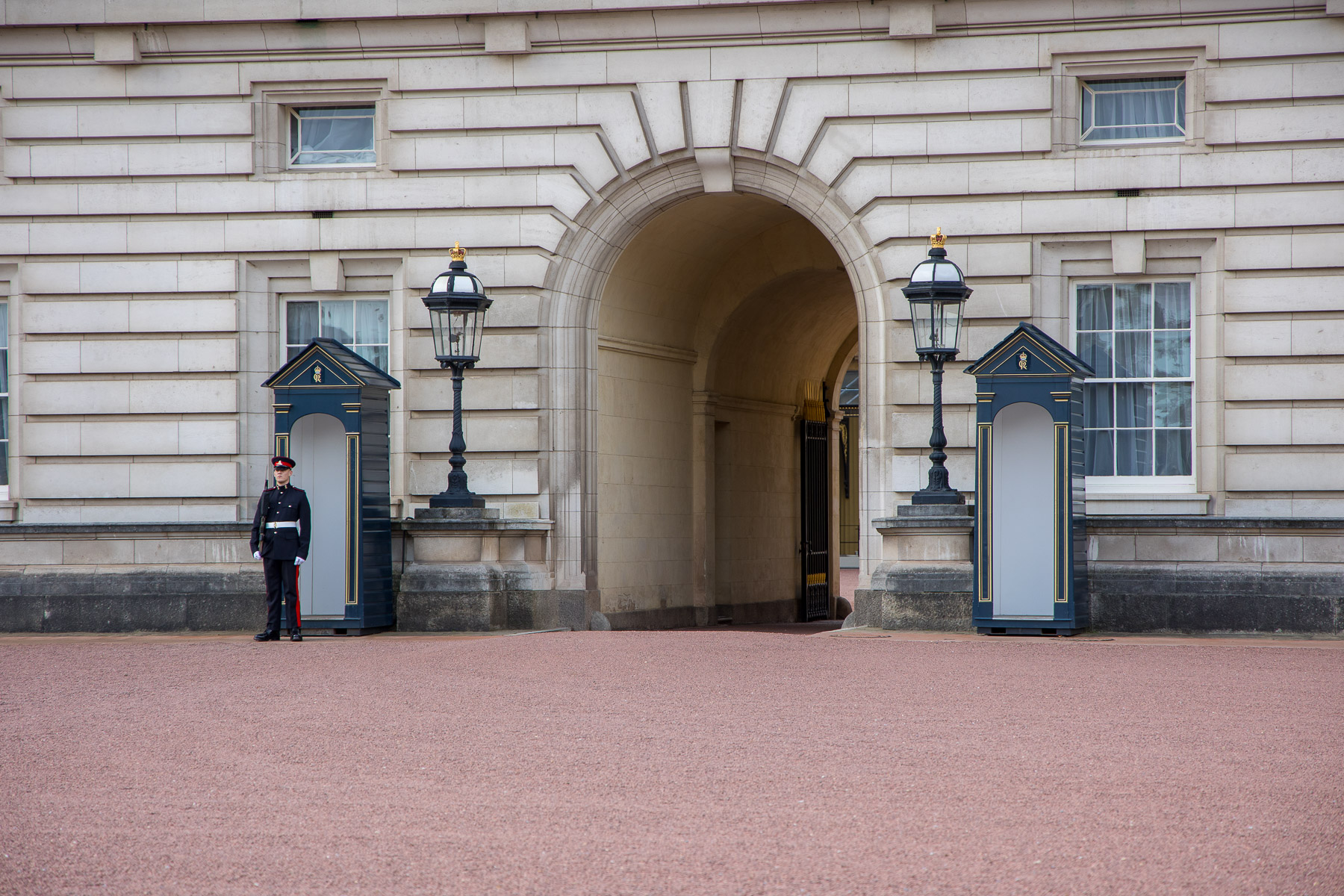
- One of the guards outside Buckingham Palace.
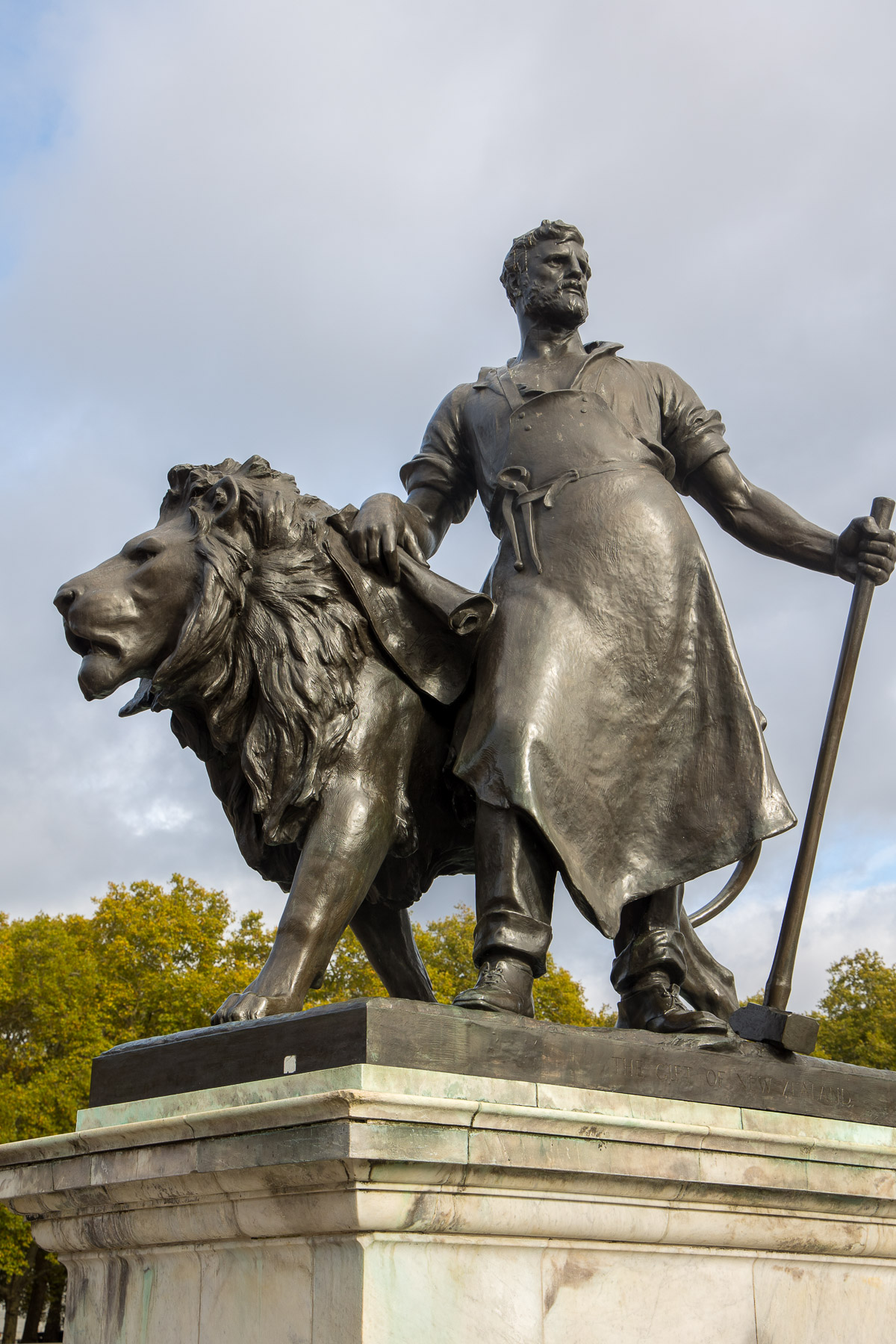
- One of the lions guarding the statue of Queen Victoria.